publications
30 publications, 27 indexed in the WoS Core Collection.
2026
- Chaos Solit.
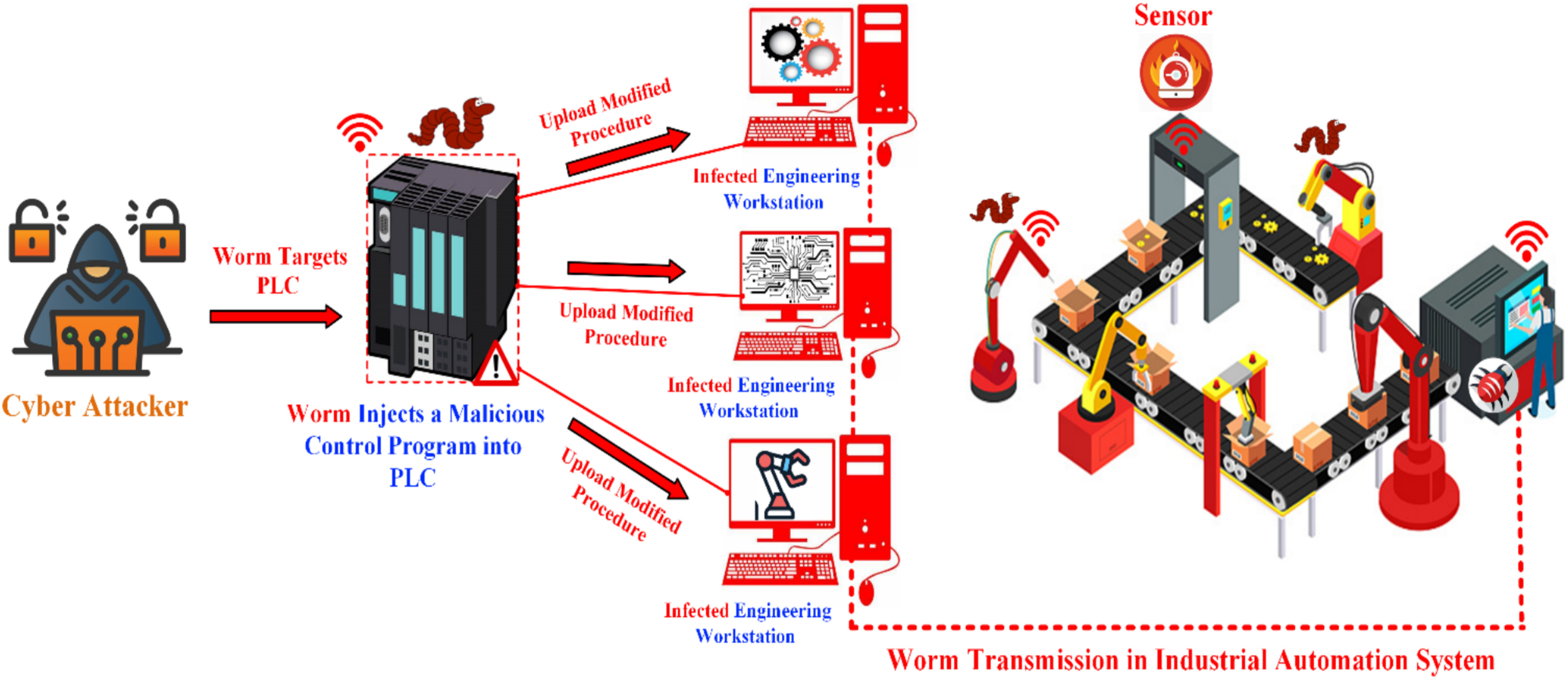 A Novel Design of Time Delay Fractional Nonlinear SIHQR Worm Transmission Model for Industrial IoT Networks: Machine Learning Knowledge Driven Neuroarchitecture AnalysisKiran Asma, Muhammad Asif Zahoor Raja, Muhammad Junaid Ali Asif Raja, Chi-Min Shu, Muhammad Ali Kiani, and Muhammad ShoaibChaos, Solitons & Fractals, 2026
Industrial Internet of Things (IoT) is a revolutionary paradigm that bridges legacy industrial infrastructure and advanced digital innovation to enhance operational proficiency, data-driven decision making, and intelligent automation. Programable Logic Controller (PLC) serves as a key pillar of industrial automation, vulnerable to becoming a target vector for cybercriminals to infiltrate industrial systems through malware dissemination in industrial network ecosystem. This study explores the fractional-order nonlinear industrial worm spread time delay (Fr-NIWS-TD) model in PLC-enabled industrial control networks by leveraging nonlinear multilayer autoregressive exogenous network (NM-ARXN) aided with Levenberg-Marquardt (LM) backpropagation, i.e., NM-ARXN-LM neuroarchitecture. The Adams-Bashforth-Moulton predictor-corrector scheme with Caputo fractional operator is efficaciously employed to simulate the system scenarios that act as a synthetic data for NM-ARXN-LM framework to address the Fr-NIWS-TD model with distinct dynamic state variables of Susceptible S, Infected I, Halted H, Quarantine Q, and Recovered R, (SIHQR) nodes for worm transmission in industrial IoT infrastructure. The methodically structured simulation analysis conducted on sundry Fr-NIWS-TD case-studies such as varying (i) the rate of quarantine node converting to recovered node along with the likelihood that its operational device program blocks are rewritten by updated programs, (ii) the rate of a recovered node losing its immunity R to S node, (iii) shutdown (halting) rate of an infected node induced by worm I to H node, (iv) quarantine rate I to Q node, (v) the rate of intrusion detection system (IDS) effectively interrupting worm spread during a unit time interval. The Fr-NIWS-TD simulation datasets, to be modeled by the intelligent computing paradigm, are stratified into training, validation and testing subsets. The proposed NM-ARXN-LM technique’s proficiency is endorsed through comprehensive performance evaluations on mean squared error (MSE) convergence trends, error distribution histograms, correlation evaluation, regression analysis, and time-series fitting patterns, while the structural integrity and convergence stability of neuroarchitecture are further substantiated through numerical comparative analysis with absolute error distribution plots. Extensive evaluations on single-step and multi-step ahead horizons with MSE of order 10-11 to 10-14, empirically underscores robustness, resilience and high-fidelity approximation competence of the NM-ARXN-LM methodology in capturing the complex worm propagation dynamics in Industrial IoT networks.
@article{asma2026iiot_sihqr, title = {A Novel Design of Time Delay Fractional Nonlinear SIHQR Worm Transmission Model for Industrial IoT Networks: Machine Learning Knowledge Driven Neuroarchitecture Analysis}, keywords = {security}, author = {Asma, Kiran and Raja, Muhammad Asif Zahoor and Raja, Muhammad Junaid Ali Asif and Shu, Chi-Min and Kiani, Muhammad Ali and Shoaib, Muhammad}, journal = {Chaos, Solitons \& Fractals}, year = {2026}, volume = {209}, pages = {118400}, doi = {10.1016/j.chaos.2026.118400}, } - Chaos Solit.
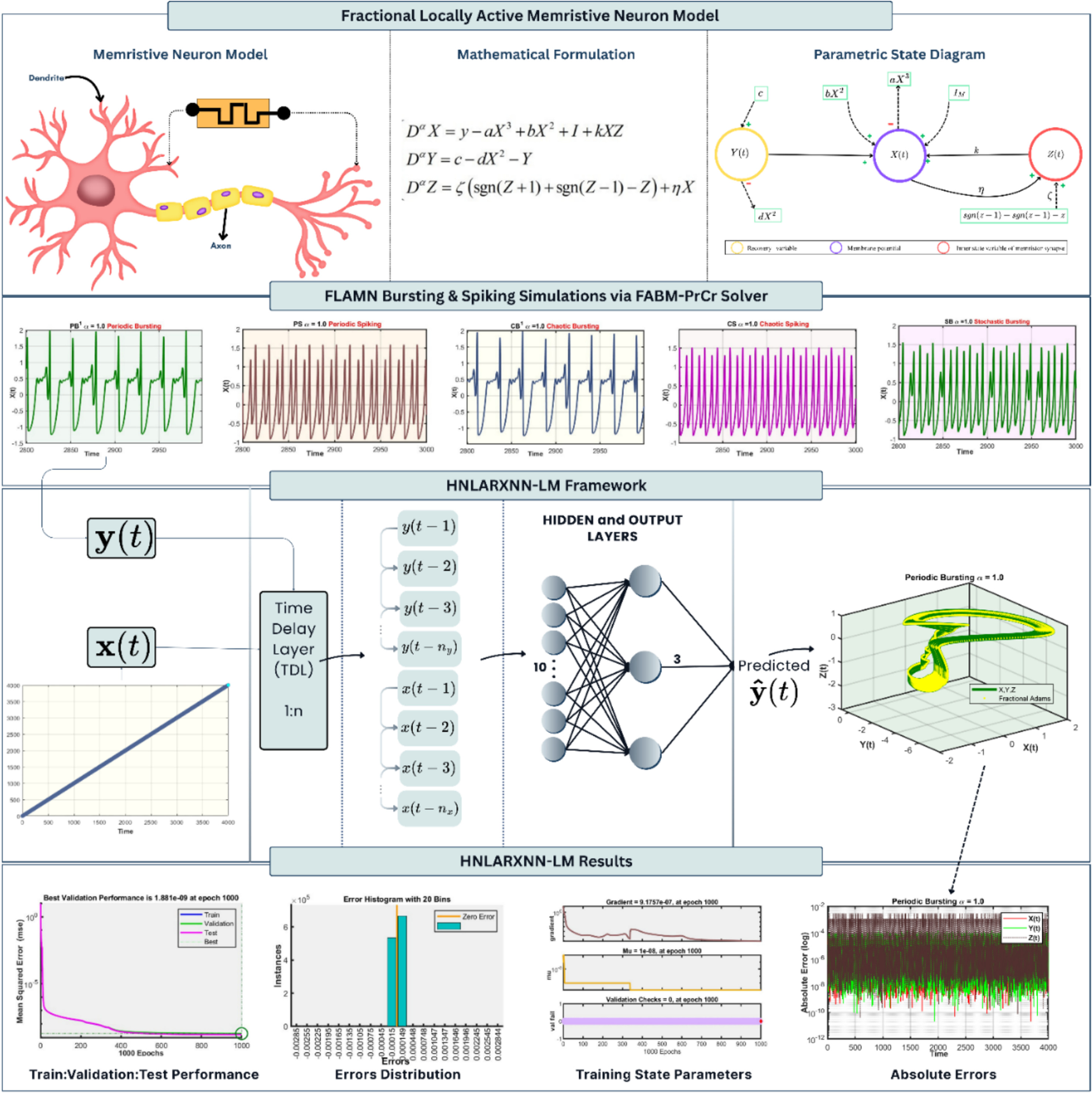 A Hybrid Intelligent Computational Framework for Diverse Firing Patterns in a Fractional-Order Locally Active Memristive Neuron ModelShehzada Taimur, Muhammad Asif Zahoor Raja, Muhammad Junaid Ali Asif Raja, Shahzaib Ahmed Hassan, Sannan Zia Abbasi, Adiqa Kausar Kiani, Muhammad Shoaib, and Chi-Min ShuChaos, Solitons & Fractals, 2026
Memristive neuronal architectures constitute sophisticated dynamical systems that exhibit complex nonlinear spiking phenomena through the synergistic integration of memory-dependent conductance modulation and intrinsic neuronal dynamics. This investigation elucidates the emergent behavioral manifestations of a Locally Active Memristive Neuron (LAMfrefeN) paradigm, synthesized through the amalgamation of a two-dimensional Hindmarsh-Rose neuronal substrate with an autaptic memristive element exhibiting locally active characteristics. In this paper, this dynamical framework undergoes systematic transformation into a fractional-order paradigm through the rigorous implementation of the Caputo fractional differential operator, namely the Fractional Locally Active Memristive Neuron (FLAMN) model. Numerical integration of the Fractional-order system is accomplished via the Adams-Bashforth-Moulton Predictor-Corrector (FABM-PrCr) computational methodology. Fractional-order derivatives inherently incorporate non-local hereditary memory effects, substantially enhancing the system’s representational fidelity in capturing the intricate temporal dynamics and long-range dependencies characteristics of biological neurons. The proposed FLAMN configuration demonstrates quintessential neuronal excitability patterns encompassing periodic bursting, periodic spiking, chaotic bursting, chaotic bursting and stochastic bursting firing regimes, thereby recapitulating the multifaceted electrophysiological repertoire observed in biological neural architectures. Subsequently, an intelligent computational framework is designed to function as a sophisticated surrogate system for the FLAMN model, by means of a Hybrid Non-Linear AutoRegressive Neural Network backpropagated through Levenberg-Marquardt (HNLARXNN-LM) algorithm. The forecasting and modeling prowess of the diverse firing patterns of the FLAMN is done through diverse error analysis on singular and multi-step ahead horizons, error histogram, correlation and regression analysis. Empirical results demonstrate mean squared errors in the ranges of 10-9-10-11. The FLAMN dynamical systems reconstruction by NLARXNN is visually apprehended through comparative time-series and absolute error evolution curves. With reconstruction error as low as 10-3-10-6, we showcase that the developed FLAMN framework demonstrates exceptional consistency in reproducing the intricate temporal dynamics and statistical properties of the memristive neuron, establishing a robust foundation for subsequent investigations into neuromorphic computing applications and theoretical neuroscience endeavors. An inference study on completely unseen FitzHugh-Nagumo spiking dynamics further validates this claim, with reconstruction errors in the ranges of 10-5 to 10-7, showcasing apt cross-generalizability and effectiveness of the HNLARXNN-LM as a surrogate differential solver.
@article{taimur2026memristive, title = {A Hybrid Intelligent Computational Framework for Diverse Firing Patterns in a Fractional-Order Locally Active Memristive Neuron Model}, keywords = {neuronal}, author = {Taimur, Shehzada and Raja, Muhammad Asif Zahoor and Raja, Muhammad Junaid Ali Asif and Hassan, Shahzaib Ahmed and Abbasi, Sannan Zia and Kiani, Adiqa Kausar and Shoaib, Muhammad and Shu, Chi-Min}, journal = {Chaos, Solitons \& Fractals}, year = {2026}, volume = {208}, pages = {118209}, doi = {10.1016/j.chaos.2026.118209}, } - Int. J. Comput. Math.
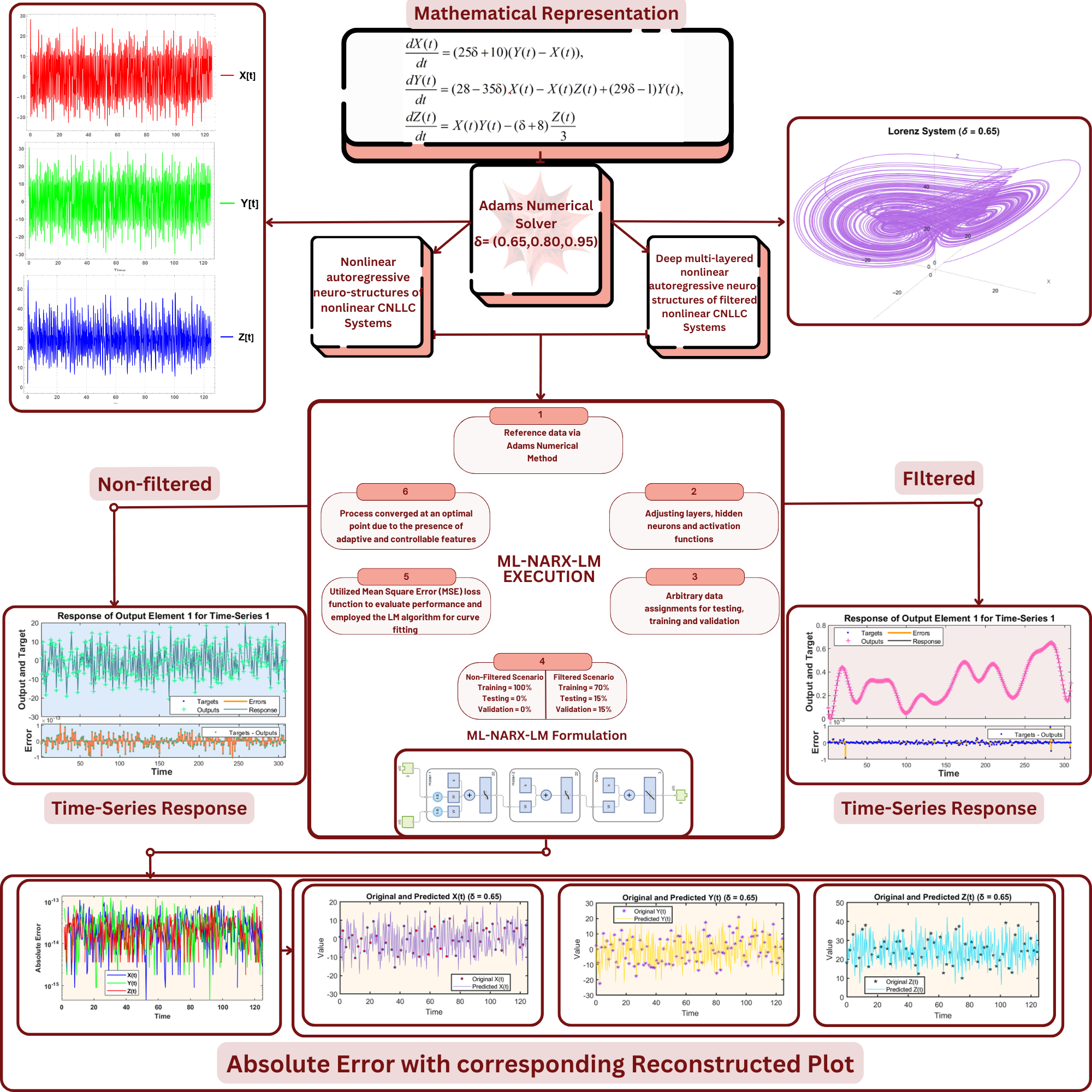 Deep Multi-Layered Autoregressive Neuro-Structures for Predictive Modelling of Nonlinear Chaotic Lorenz-Lü-Chen Systems in Rayleigh-Bénard ConvectionShahzaib Ahmed Hassan, Muhammad Junaid Ali Asif Raja, Chuan-Yu Chang, Chi-Min Shu, Muhammad Shoaib, Adiqa Kausar Kiani, Aneela Kausar, and Muhammad Asif Zahoor RajaInternational Journal of Computer Mathematics, 2026
In this study, a deep multi-layered Nonlinear Autoregressive Exogenous neuro-structures optimized with Levenberg-Marquardt (ML-NARX-LM) is exploited to analyse the Rayleigh-Bénard convection based chaotic nonlinear Lorenz-Lü-Chen (CNLLC) systems within the context of fluid dynamics. The CNLLC simulations are acquired by using the Adams numerical method for the three families of the model. A Savitzky–Golay filter based preprocessing is applied on the CNLCC results to effectively isolate and remove noise and chaos for better predictive capabilities. The filtered solutions were then utilized in the designed ML-NARX-LM scheme by segmenting arbitrarily into training, testing and validation samples to predict the dynamics of CNLLC efficaciously. Our findings demonstrate that the ML-NARX-LM model, when applied to the filtered data, achieves low predictive error for all three families of chaotic systems by means of learning curves on MSE, error histograms, absolute error scrutiny, and regression indices.
@article{hassan2026ijcm_lorenzluchen, title = {Deep Multi-Layered Autoregressive Neuro-Structures for Predictive Modelling of Nonlinear Chaotic Lorenz-L{\"u}-Chen Systems in Rayleigh-B{\'e}nard Convection}, keywords = {chaotic}, author = {Hassan, Shahzaib Ahmed and Raja, Muhammad Junaid Ali Asif and Chang, Chuan-Yu and Shu, Chi-Min and Shoaib, Muhammad and Kiani, Adiqa Kausar and Kausar, Aneela and Raja, Muhammad Asif Zahoor}, journal = {International Journal of Computer Mathematics}, year = {2026}, pages = {1--27}, doi = {10.1080/00207160.2026.2649623}, } - Water Res.
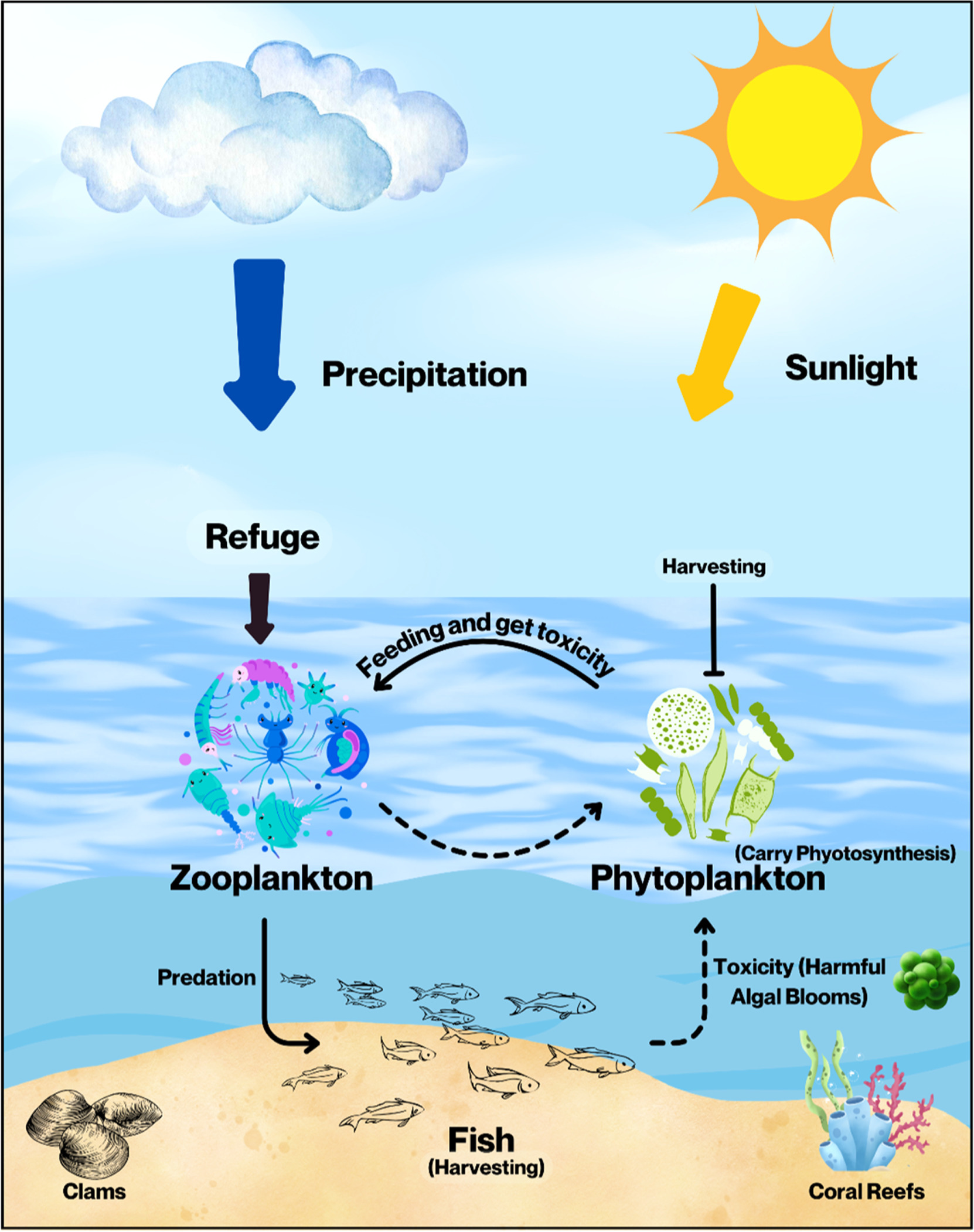 Neuro-Computational Surrogates for Aqueous Fractional-Order Nekton-Plankton Spatiotemporal Dynamics Under Toxicant Stress, Refuge Efficacy, and Nutrient Flux ModulationAdil Sultan, Chuan-Yu Chang, Muhammad Junaid Ali Asif Raja, Adiqa Kausar Kiani, Muhammad Shoaib, and Muhammad Asif Zahoor RajaWater Research, 2026
In aquatic ecosystems, the triadic relationship among phytoplankton, zooplankton, and their piscine predators constitutes a delicately balanced ecological continuum where nutrient cycling, toxin transfer, and spatial refugia collectively dictate population persistence and the wider vitality of marine communities. In this paper, the fractional-order dynamics of Nekton-Plankton Coupled (N-PC) systems are analyzed using intelligent computing driven autoregressive exogenous artificial neural networks (ARX-ANNs). Initially, fractional N-PC dynamics under toxicity, refuge and nutrient flux constrains are time-evolved using an efficient Adams-Moulton-Bashforth predictor corrector method incorporating the Caputo fractional operator. These diverse scenarios are subsequently fed into the ARX-ANNs that are efficiently trained by means of a hybrid second order Bayesian Regularized Levenberg Marquardt optimization algorithm. The efficiency of the intelligent computing regime in modeling and forecasting the complex dynamics of the N-PC model is comprehensively evaluated against reference simulations using mean squared error convergence curves, time-series response analysis, correlation charts (for autoregressive models), error frequency distributions, and regression reports. Comparative analysis between the traditional numerical approach against the ARX-ANNs demonstrates remarkably low errors in the ranges of 10-04 to 10-12. To further assess the robustness of the proposed methodology, step ahead forecasts of single and multiple prediction horizons are explored, and validated with low errors on the order of <10-13. Results show that the intelligent neuro-computing surrogate can effectively delineate the ecological spatiotemporal dynamics and population trajectories in complex marine food webs.
@article{sultan2026nekton,
  title = {Neuro-Computational Surrogates for Aqueous Fractional-Order Nekton-Plankton Spatiotemporal Dynamics Under Toxicant Stress, Refuge Efficacy, and Nutrient Flux Modulation},
  keywords = {ecological},
  author = {Sultan, Adil and Chang, Chuan-Yu and Raja, Muhammad Junaid Ali Asif and Kiani, Adiqa Kausar and Shoaib, Muhammad and Raja, Muhammad Asif Zahoor},
  journal = {Water Research},
  year = {2026},
  volume = {289},
  number = {A},
  doi = {10.1016/j.watres.2025.124754},
}
2025
- Environ. Monit.
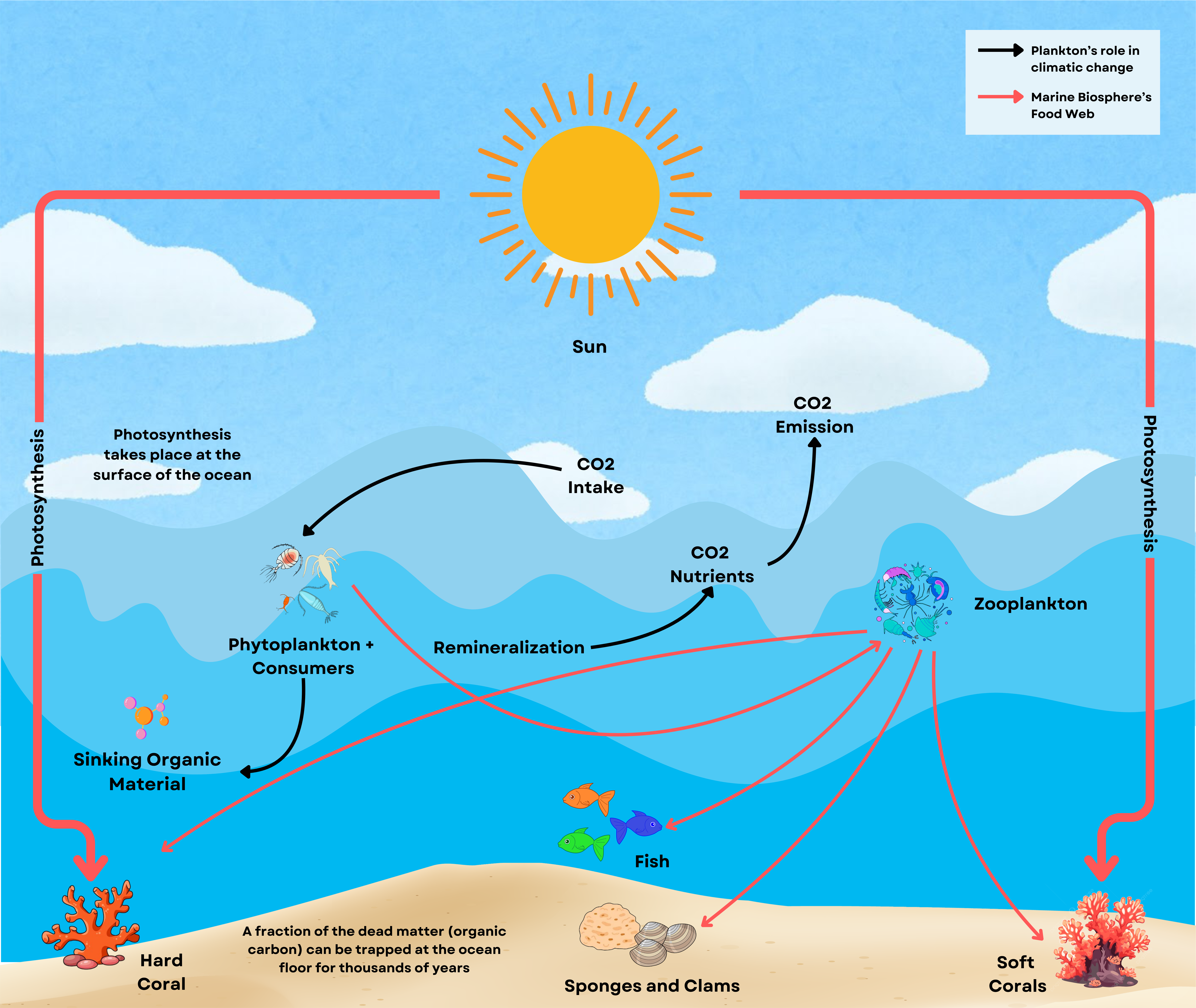 Predictive Analysis of Plankton Population Dynamics in Marine Biosphere: A Nonlinear ARX Neural Network for the Carbon-Thermal-Nutrient-Plankton Asymmetric Multifactor System for Global WarmingAdil Sultan, Muhammad Junaid Ali Asif Raja, Chuan-Yu Chang, Chi-Min Shu, Adiqa Kausar Kiani, Muhammad Shoaib, and Muhammad Asif Zahoor RajaEnvironmental Monitoring and Assessment, 2025
Plankton dynamics lie at the core of biogeochemical cycles and ecosystem function, which makes dependable prediction essential. Neural network-based approximations show strong potential in capturing these nonlinear interactions due to their flexibility and efficiency. In this study, a dynamic nonlinear autoregressive exogenous neural network trained with the Levenberg–Marquardt algorithm (ARX-LMA) is exploited on the nonlinear carbon thermal nutrient-plankton autonomous dynamics (NCTNP-AD) system for plankton population in the marine biosphere influenced by the impact of global warming and climate change. Four nonlinear ordinary differential equations construct the asymmetric multifactor NCTNP-AD system reflected by the concentrations of carbon dioxide, temperature, nutrient, and plankton population in the marine biosphere. The Adams numerical solver is efficiently utilized to create synthetic temporals by varying rates of plankton maintaining the CO2 concentration by assimilating dissolved nutrients via membrane transporters in response to temperature, the net carbon dioxide absorption rate by the plankton population density, and the predation rate of plankton by fish within the NCTNP-AD system essentially fueling marine primary production. The neuro-computing-based ARX-LMA networks are specifically trained on these datasets to quantify, model, and anticipate the population density changes of the plankton community via a multifactor asymmetric NCTNP-AD system under global warming conditions. The novel ARX-LMA technique’s efficacy is thoroughly validated across simulated reference solutions. The comparison includes error convergence graphs, training response graphs, hyperparameter state graphs, error-input correlations, error autocorrelation, regression analysis, error histograms, absolute error, and corresponding reconstruction graphs. Single- and multi-step ahead ARX-LMA predictors were expertly constructed to predict the effects of global warming on plankton population. Step-ahead and multi-step prediction errors in the range of 10–10 to 10–12 affirm the efficacy of ARX-LMA in accurately modeling and forecasting the complex NCTNP-AD system. These findings showcase that machine-learning-based surrogates can provide accurate and adaptable emulators and forecasters of coupled plankton dynamics.
@article{sultan2025env_monitoring, title = {Predictive Analysis of Plankton Population Dynamics in Marine Biosphere: A Nonlinear ARX Neural Network for the Carbon-Thermal-Nutrient-Plankton Asymmetric Multifactor System for Global Warming}, keywords = {ecological}, author = {Sultan, Adil and Raja, Muhammad Junaid Ali Asif and Chang, Chuan-Yu and Shu, Chi-Min and Kiani, Adiqa Kausar and Shoaib, Muhammad and Raja, Muhammad Asif Zahoor}, journal = {Environmental Monitoring and Assessment}, year = {2025}, volume = {197}, number = {12}, doi = {10.1007/s10661-025-14818-5}, } - IEEE TCBB
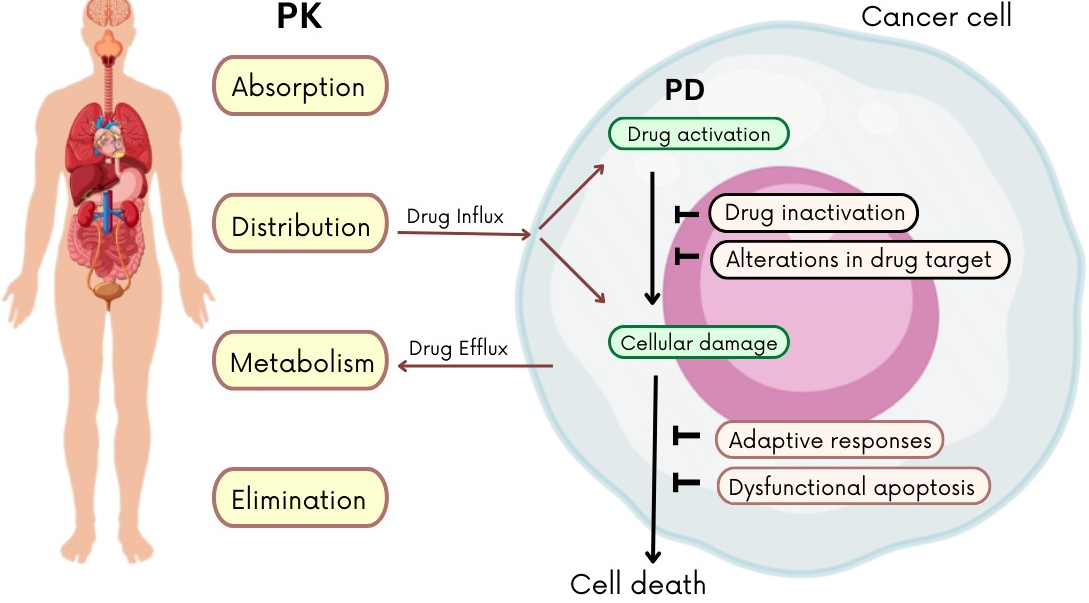 Stochastic-Deterministic Modeling of Immune Responses and Tumor Evolution Under Therapeutic Influence: Intelligent Predictive Supervised Exogenous NetworksHassan Raza, Muhammad Junaid Ali Asif Raja, Rikza Mubeen, Zaheer Masood, and Muhammad Asif Zahoor RajaIEEE Transactions on Computational Biology and Bioinformatics, 2025
The incredible synergy between monoclonal anti- bodies and interferons in cancer chemotherapy signifies a stride forward in our battle against this inexorable disease. Through meticulous mathematical modeling that delineate the interplay between tumor growth and immune response, this helps in the development of immunomodulatory treatments and aids in counteracting the cost of drug discovery while minimizing the resource-intensive experimental iterations. This study develops a precise and reliable application of numerical as well as artificial intelligence-based treatment methodology via predictive super- vised eXegenious networks for calculable understanding of the movement of the immune response to treatment such as timing, dosing and forecasting therapy retorts to a specific dose. The out- comes of this work underscore the potency of these methodologies in clarifying the pivotal determinants essential to the dynamic of tumor-immune interactions, therapeutic efficacy and the for- mulation of rationalized therapeutic interventions. In the pursuit of unraveling the complexities inherent to the interactions within the tumor-immune-chemotherapy model, this study harnesses the predictive power of nonlinear autoregressive exogenous (NARX) networks, synergistically coalesced with stochastic-deterministic differential modeling, to unfold the hidden intricacies that hold significant potential within this intricate process. Reference data for training, testing and validation of the proposed methodology was generated using Adams numerical method by utilizing baseline parameters derived through experimental data. Error analysis was conducted to verify the authenticity and perfor- mance of the designed framework for different scenarios. The framework demonstrates impressive performance and accuracy, achieving a mean square error between 10^-11 and 10^-8 through iterative refinement.
@article{raza2025ieee_tumor, title = {Stochastic-Deterministic Modeling of Immune Responses and Tumor Evolution Under Therapeutic Influence: Intelligent Predictive Supervised Exogenous Networks}, keywords = {biomedical}, author = {Raza, Hassan and Raja, Muhammad Junaid Ali Asif and Mubeen, Rikza and Masood, Zaheer and Raja, Muhammad Asif Zahoor}, journal = {IEEE Transactions on Computational Biology and Bioinformatics}, year = {2025}, volume = {22}, number = {6}, pages = {2764--2773}, doi = {10.1109/TCBBIO.2025.3604337}, } - CMES
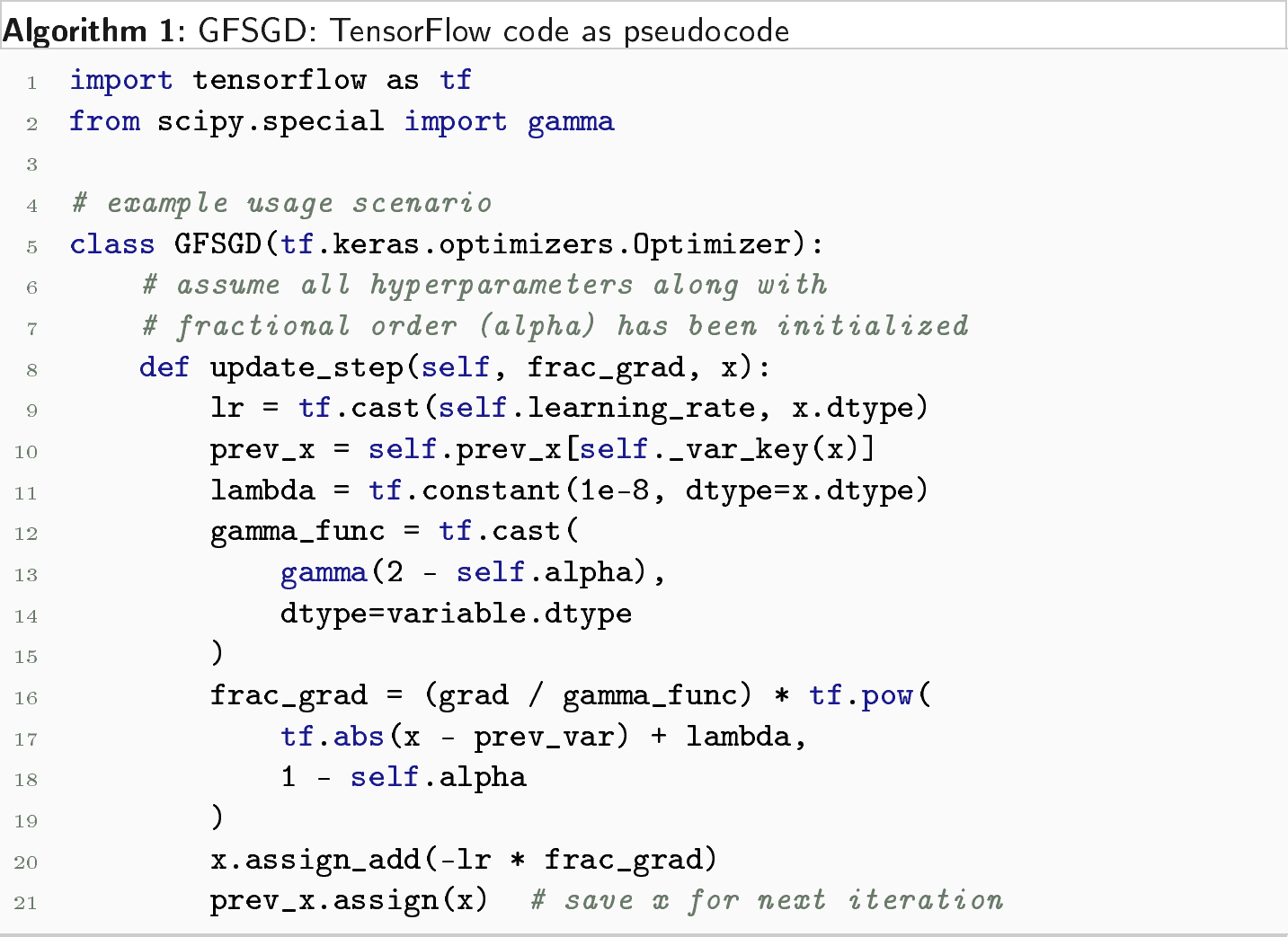 Systematic Analysis of Latent Fingerprint Patterns through Fractionally Optimized CNN Model for Interpretable Multi-Output IdentificationMubeen Sabir, Zeshan Aslam Khan, Muhammad Waqar, Khizer Mehmood, Muhammad Junaid Ali Asif Raja, Naveed Ishtiaq Chaudhary, Khalid Mehmood Cheema, Muhammad Asif Zahoor Raja, Muhammad Farhan Khan, and Syed Sohail AhmedCMES-Computer Modeling in Engineering & Sciences, 2025
Fingerprint classification is a biometric method for crime prevention. For the successful completion of various tasks, such as official attendance, banking transactions, and membership requirements, fingerprint classification methods require improvement in terms of accuracy, speed, and the interpretability of non-linear demographic features. Researchers have introduced several CNN-based fingerprint classification models with improved accuracy, but these models often lack effective feature extraction mechanisms and complex multineural architectures. In addition, existing literature primarily focuses on gender classification rather than accurately, efficiently, and confidently classifying hands and fingers through the interpretability of prominent features. This research seeks to improve a compact, robust, explainable, and non-linear feature extraction-based CNN model for robust fingerprint pattern analysis and accurate yet efficient fingerprint classification. The proposed model (a) recognizes gender, hands, and fingers correctly through an advanced channel-wise attention-based feature extraction procedure, (b) accelerates the fingerprints identification process by applying an innovative fractional optimizer within a simple, but effective classification architecture, and (c) interprets prominent features through an explainable artificial intelligence technique. The encapsulated dependencies among distinct complex features are captured through a non-linear activation operation within a customized CNN model. The proposed fractionally optimized convolutional neural network (FOCNN) model demonstrates improved performance compared to some existing models, achieving high accuracies of 97.85%, 99.10%, and 99.29% for finger, gender, and hand classification, respectively, utilizing the benchmark Sokoto Coventry Fingerprint Dataset.
@article{sabir2025fingerprint, title = {Systematic Analysis of Latent Fingerprint Patterns through Fractionally Optimized CNN Model for Interpretable Multi-Output Identification}, keywords = {optimization}, author = {Sabir, Mubeen and Khan, Zeshan Aslam and Waqar, Muhammad and Mehmood, Khizer and Raja, Muhammad Junaid Ali Asif and Chaudhary, Naveed Ishtiaq and Cheema, Khalid Mehmood and Raja, Muhammad Asif Zahoor and Khan, Muhammad Farhan and Ahmed, Syed Sohail}, journal = {CMES-Computer Modeling in Engineering \& Sciences}, year = {2025}, volume = {145}, number = {1}, pages = {807--855}, doi = {10.32604/cmes.2025.068131}, } - Nonlinear Dyn.
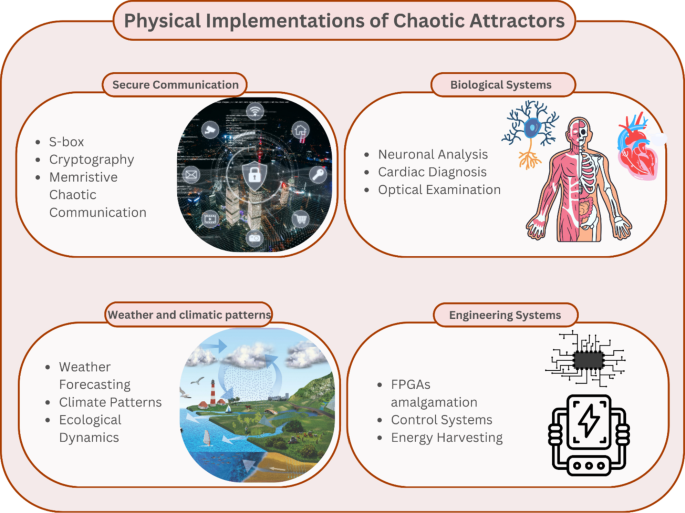 Design of Stochastic Backpropagative Autoregressive Exogenous Neuroarchitectures for Predictive Analysis of Fractional-Order Nonlinear Rabinovich-Fabrikant Chaotic AttractorsShahzaib Ahmed Hassan, Muhammad Junaid Ali Asif Raja, Syed Zoraiz Ali Sherazi, Chuan-Yu Chang, Chi-Min Shu, Adiqa Kausar Kiani, Zeshan Aslam Khan, Muhammad Shoaib, and Muhammad Asif Zahoor RajaNonlinear Dynamics, 2025
The Rabinovich–Fabrikant system epitomizes a fundamental construct in nonlinear dynamical systems, where subtle parametric interplays lead to the emergence of intricate chaotic attractors, and an exceptionally sensitive dependence on initial conditions within multifaceted physical contexts. In this paper, we present a fractional-order Rabinovich–Fabrikant (FO–RF) system demonstrating chaotic attractor-like behavior under different fractional orders and parameter sets. This characterization is achieved through a twofold approach: first, an efficient Caputo fractional differentiation-based Adams multistep PECE solver is incorporated to numerically treat the nonlinear FO-RF systems; second, a nonlinear AutoRegressive eXogenous (ARX) temporal neuro-structure is devised to simulate, analyze and characterize the ensuing chaotic dynamics. The numerical outcomes are prepared for the nonlinear ARX neural network characterization through a time-based partitioning into training, validation and testing sets, with optimized temporal feature learning through a Bayesian Regularized Levenberg Marquardt backpropagation (BRLM-BP-ARX) algorithm. These predicted sequences are rigorously evaluated against their numerical counterparts with analysis on iterative error convergence charts, regression reports, correlation infographics, and sequential temporal responses. Additionally, a thorough comparative error analysis for the simulated FO-RF solutions is carried out. To further assess the temporal feature learning robustness, the BRLM-BP-ARX neural network’s one-step-ahead and multi-step-ahead forecasting capabilities are tested for the intricate FO-RF chaotic dynamics. The empirical results from exhaustive experiments showcase that the BRLM-BP-ARX framework attains diminutive errors, spanning from 10–7 to 10–12, underscoring effectiveness of the approach for intricate fractional-order nonlinear dynamical systems.
@article{hassan2025rabinovich, title = {Design of Stochastic Backpropagative Autoregressive Exogenous Neuroarchitectures for Predictive Analysis of Fractional-Order Nonlinear Rabinovich-Fabrikant Chaotic Attractors}, keywords = {chaotic}, author = {Hassan, Shahzaib Ahmed and Raja, Muhammad Junaid Ali Asif and Sherazi, Syed Zoraiz Ali and Chang, Chuan-Yu and Shu, Chi-Min and Kiani, Adiqa Kausar and Khan, Zeshan Aslam and Shoaib, Muhammad and Raja, Muhammad Asif Zahoor}, journal = {Nonlinear Dynamics}, year = {2025}, volume = {113}, number = {25}, pages = {34451--34483}, doi = {10.1007/s11071-025-11827-4}, } - J. Ind. Inf. Integr.
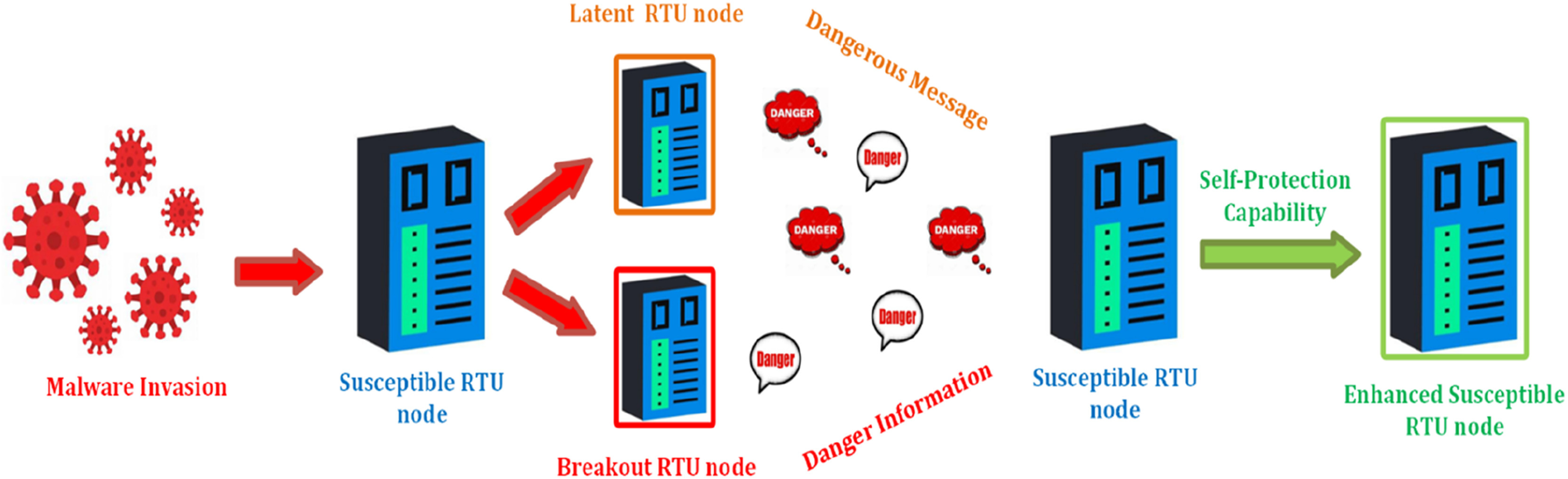 Machine Learning Knowledge Driven Investigation for Immunity Infused Fractional Industrial Virus Transmission in SCADA SystemsKiran Asma, Muhammad Asif Zahoor Raja, Chuan-Yu Chang, Muhammad Junaid Ali Asif Raja, Chi-Min Shu, and Muhammad ShoaibJournal of Industrial Information Integration, 2025
Supervisory control and data acquisition (SCADA) environment is a highly sensitive and crucial industrial control system primarily deployed to monitor, control and automate the critically integrated and interconnected complex networks. Due to revolution in communication technology, SCADA systems encounter escalating cybersecurity threats and mandate proactive safeguard mechanisms to prevent cyberattack surfaces that may interrupt critical core services, maleficent equipment, and even threaten the social security in certain circumstances. This work aims to enhance the standard nonlinear industrial virus transmission (NIVT) model with immunity for SCADA systems by incorporating fractional-order processing and then leveraging machine learning through nonlinear multilayer autoregressive exogenous (NM-ARX) neural networks iteratively trained with Bayesian regularization (BR) – the NM-ARX-BR methodology. The Caputo fractional differentiation operator inspired fractional implicit Adams-Moulton and explicit Adams-Bashforth multistep solvers are used to generate reference simulation dataset for NM-ARX-BR neuroarchitecture in case of fractional kinetic of immunity-based NIVT model with five dynamic states susceptible nodes S, enhanced-susceptible nodes E, latent nodes L, breakout nodes B, and recovered nodes R in the SCADA environment. The rigorous simulation based comprehensive comparative evaluation revealed that the low value of fitness on mean square error (MSE) in the range of 10-14 to 10-16 is achieved by NM-ARX-BR neurocomputational framework for sundry case studies of immunity-based NIVT system and performance is further validated by proximity analysis, cross correlation and autocorrelation analysis, histogram frequency distribution and regression statistics. The presented NM-ARX-BR framework depicts the resilience, accuracy, and consistency in modelling the fractional kinetics of immunity-based nonlinear industrial virus transmission in the SCADA systems by executing single and multiple step-ahead prediction measures during the exhaustive numerical simulations with error ranges of 10-13 to 10-16. The performance assessment is carried out utilizing three standard error metrics MSE, mean absolute error (MAE), root mean square error (RMSE) and phase space error (PSE). The error values of MSE, MAE, PSE and RMSE are remarkably low 10-07 to 10-09, demonstrate the robustness, generalization capability and high fidelity of NM-ARX-BR technique.
@article{asma2025scada, title = {Machine Learning Knowledge Driven Investigation for Immunity Infused Fractional Industrial Virus Transmission in SCADA Systems}, keywords = {security}, author = {Asma, Kiran and Raja, Muhammad Asif Zahoor and Chang, Chuan-Yu and Raja, Muhammad Junaid Ali Asif and Shu, Chi-Min and Shoaib, Muhammad}, journal = {Journal of Industrial Information Integration}, year = {2025}, volume = {48}, doi = {10.1016/j.jii.2025.100940}, } - Int. J. Inf. Secur.
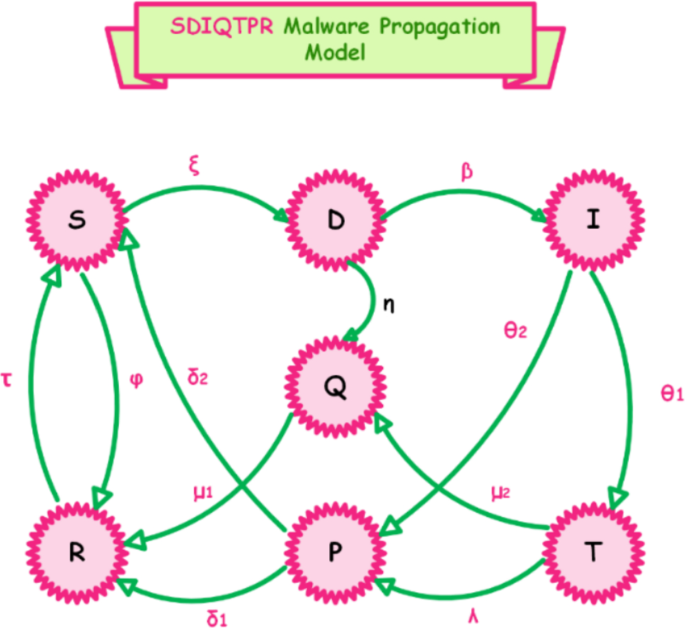 A Machine Learning Approach Using Nonlinear ARX Neural Networks with Bayesian Regularization for Epidemic Malware Dynamics in Critical Network InfrastructuresKiran Asma, Muhammad Asif Zahoor Raja, Chuan-Yu Chang, Muhammad Junaid Ali Asif Raja, Muhammad Shoaib, and Chi-Min ShuInternational Journal of Information Security, 2025
The rapid growth in digitalization is a primary factor of advancement and expansion in malware attack surfaces in critical network infrastructures. Consequently, in the present era, modelling of these modern trends in malware propagation have utmost interest for the research scholars to mitigate its adverse impact on industrial, strategic and commercial sectors. In this study, an innovative machine learning driven neuroarchitecture is developed for modelling the dynamics of malware propagation in critical network architectures by integrating the nonlinear multilayer autoregressive exogenous neural networks (NARXNN) with Bayesian regularization (BR) i.e. NARXNN-BR algorithm. The proposed NARXNN-BR technique is implemented on an epidemic nonlinear malware propagation (ENMP) model constructed on seven dynamic states: susceptible, delitescent, infected, quarantine, traced, patched and recovered nodes to investigates the chronological dependencies and complicated interactions of malware spread. The synthetic data for ENMP model is generated via Adams numerical solver to analyze the dynamics of malware spread in the networks corresponding to the distinct case studies such as variation in the rate of suspectable to infected nodes, the rate of delitescent to infected nodes, the rate of recovered to susceptible nodes, the rate of susceptible to recovered nodes, the rate of delitescent to isolated nodes and the rate of traced to patched nodes. The machine learning predictive NARXNN-BR system is executed for diverse case studies of ENMP model by randomly perturb data for training, testing and validation sets to formulate a solution network through minimization of MSE in the range 10–09 to 10–10. The robustness of presented NARXNN-BR methodology is substantiated by comparative evaluation on convergence tendencies of MSE metric, correlation assessment between inputs and outputs, histograms analysis of error and autocorrelation indices for error to investigate the ENMP system.
@article{asma2025malware_arxnn, title = {A Machine Learning Approach Using Nonlinear ARX Neural Networks with Bayesian Regularization for Epidemic Malware Dynamics in Critical Network Infrastructures}, keywords = {security}, author = {Asma, Kiran and Raja, Muhammad Asif Zahoor and Chang, Chuan-Yu and Raja, Muhammad Junaid Ali Asif and Shoaib, Muhammad and Shu, Chi-Min}, journal = {International Journal of Information Security}, year = {2025}, volume = {24}, number = {5}, doi = {10.1007/s10207-025-01104-1}, } - J. Therm. Anal.
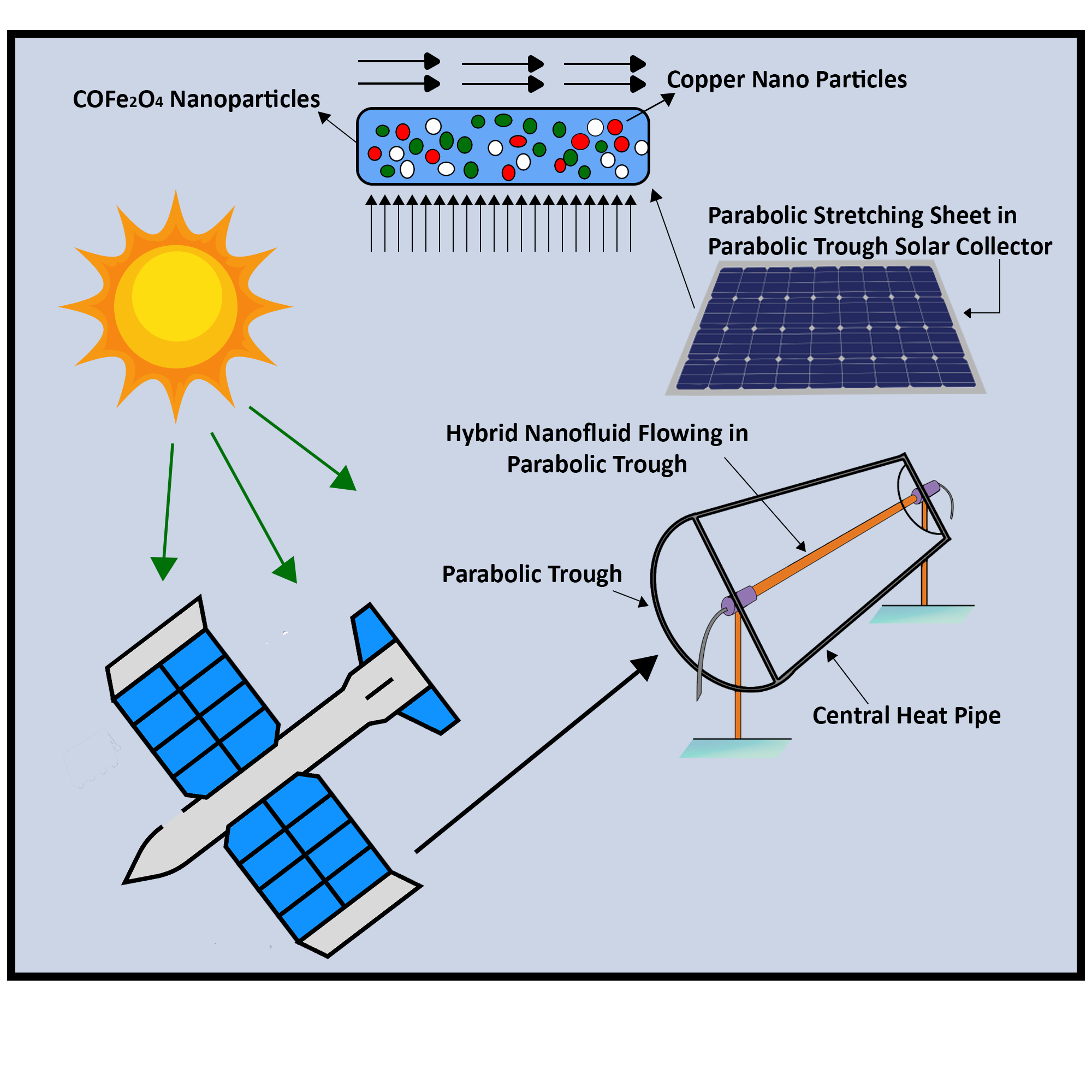 Prandtl-Eyring Hybrid Nanofluidic Thermal Flow Model in Solar Aircrafts: A Novel Design of Dual-Layered Nonlinear Autoregressive Exogenous Neural ArchitectureMaryam Pervaiz Khan, Muhammad Junaid Ali Asif Raja, Adil Sultan, Chuan-Yu Chang, Muhammad Shoaib, Zeshan Aslam Khan, Adiqa Kausar Kiani, Chi-Min Shu, and Muhammad Asif Zahoor RajaJournal of Thermal Analysis and Calorimetry, 2025
Artificial intelligence significantly enhances the application of computational fluid dynamics in solar aircraft design by enabling faster and more accurate simulations of airflow around the aircraft. Expert AI integration allows engineers to analyze complex aerodynamic patterns to improve the effective solar energy utilization and flights durations. This study focuses on a computational fluid dynamics problem examining the thermal analysis of a Prandtl–Eyring hybrid nanofluidic (PE-HNF) model arising in solar aircrafts. A dual-layered nonlinear autoregressive exogenous neural architecture enhanced with Bayesian regularization technique (D-NARX-BRT) is devised to exact the dynamics underlying the PE-HNF solar aircraft model. An Adams-based numerical scheme is deployed to exact the solutions for the PE-HNF, where parameters such as Prandtl–Eyring parameter, Biot number, magnetic parameter, mass transfer parameter, Eckert number, thermal radiation parameter and velocity slip parameters are systematically varied while maintaining fixed values for the Prandtl number. The predictive prowess of the D-NARX-BRT is evaluated against these reference numerical solutions through iterative convergence curves based on mean squared error (MSE), an analysis of adaptive controlling factors, statistical error histogram plots, regression analysis, autocorrelation plots and input-error correlation plots. The D-NARX-BRT technique shows consistent robustness through the 35 experiments as reflected by the low mean squared errors in the range of 10–11 to 10–14. The exhaustive comparative analysis showcases the adeptness of this innovative intelligent computing scheme for the intricate nonlinear differential aerodynamic and energy bottlenecks in solar aviation systems.
@article{khan2025prandtl, title = {Prandtl-Eyring Hybrid Nanofluidic Thermal Flow Model in Solar Aircrafts: A Novel Design of Dual-Layered Nonlinear Autoregressive Exogenous Neural Architecture}, keywords = {fluids}, author = {Khan, Maryam Pervaiz and Raja, Muhammad Junaid Ali Asif and Sultan, Adil and Chang, Chuan-Yu and Shoaib, Muhammad and Khan, Zeshan Aslam and Kiani, Adiqa Kausar and Shu, Chi-Min and Raja, Muhammad Asif Zahoor}, journal = {Journal of Thermal Analysis and Calorimetry}, year = {2025}, volume = {150}, number = {13}, pages = {10031--10055}, doi = {10.1007/s10973-025-14396-1}, } - Chaos Solit.
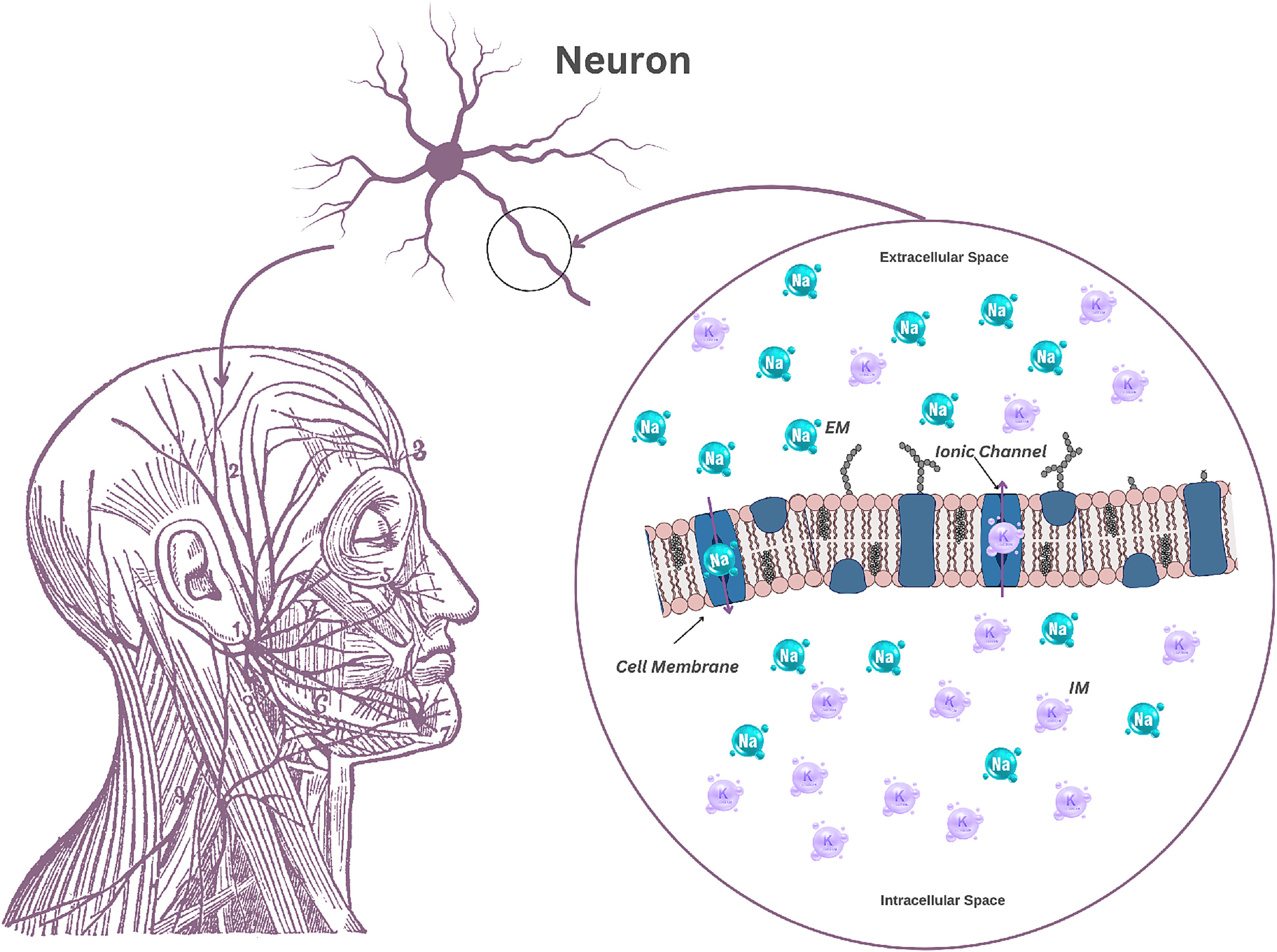 A Hybrid Neural-Computational Paradigm for Complex Firing Patterns and Excitability Transitions in Fractional Hindmarsh-Rose Neuronal Models leadMuhammad Junaid Ali Asif Raja, Shahzaib Ahmed Hassan, Chuan-Yu Chang, Chi-Min Shu, Adiqa Kausar Kiani, Muhammad Shoaib, and Muhammad Asif Zahoor RajaChaos, Solitons & Fractals, 2025
The Hindmarsh-Rose (HMR) model, widely regarded as a cornerstone in the field of computational neuroscience, distills complex neuronal dynamics into a tractable framework capable of reproducing diverse firing patterns – ranging from tonic spiking to bursting and chaotic dynamics – while maintaining an essential balance of biological plausibility and mathematical simplicity for the exploration of neuronal excitability, synaptic interactions, synchronization patterns and emergent network-level phenomena. This paper presents the fractional-order extension of the HMR neuronal model, demonstrating a diverse range of firing behaviors, including slow spiking, chaotic bursting, fast spiking, Type I and Type II bursting, and chaotic spiking. The fractional HMR neuronal models’ spatiotemporal dynamics are numerically simulated using an efficient Caputo Fractional Adams-Bashforth-Moulton Predictor-Corrector (FABM-PECE) solver. A novel Nonlinear AutoRegressive eXogenous Neural Network enhanced with hybrid second-order Levenberg Marquardt optimization algorithm (LMNARXNNs) is designed to delineate, analyze and simulate the fractional HMR neuronal models. A comprehensive experimental investigation is conducted to compare the proposed intelligent computing technique with reference HMR solutions. This proposed neural network strategy undergoes extensive analysis using iterative performance curves (MSE) for training, testing and validation, along with error autocorrelation, error histograms, regression analysis and correlation examinations between exogenous inputs and errors. Through comparative graphical illustrations and absolute error evaluations between the LMNARXNN and FAMB-PECE solutions, it is observed that LMNARXNN encapsulates each fractional HMR neuronal model impeccably with error evaluations in the ranges of 10-02 to 10-05. Further scrutiny on 1-Step and multi-step (5-Step) predictions, with errors on the order of 10-07 to 10-09, validates the robustness and precision of the LMNARXNN approach in accurately delineating the intricate fractional HMR firing patterns. These findings underscore that the LMNARXNN strategy constitutes a highly accurate methodological framework for modeling and forecasting neuronal dynamics, firing patterns, excitability transitions and complex temporal structures.
@article{raja2025hybrid, title = {A Hybrid Neural-Computational Paradigm for Complex Firing Patterns and Excitability Transitions in Fractional Hindmarsh-Rose Neuronal Models}, keywords = {neuronal}, author = {Raja, Muhammad Junaid Ali Asif and Hassan, Shahzaib Ahmed and Chang, Chuan-Yu and Shu, Chi-Min and Kiani, Adiqa Kausar and Shoaib, Muhammad and Raja, Muhammad Asif Zahoor}, journal = {Chaos, Solitons \& Fractals}, year = {2025}, doi = {10.1016/j.chaos.2025.116149}, } - Appl. Soft Comput.
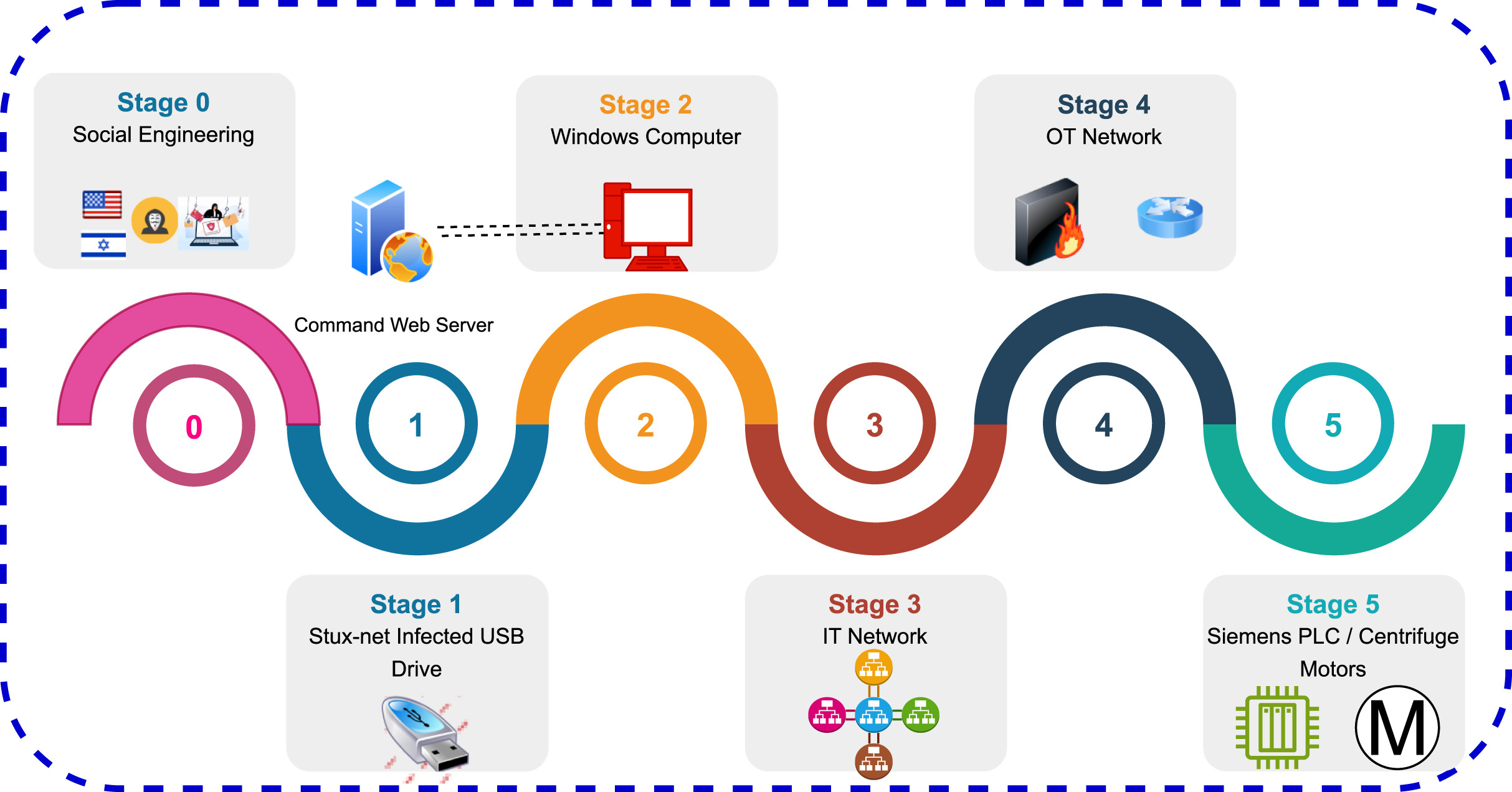 Design of Deep Learning Networks for Nonlinear Delay Differential System for Stuxnet Virus Spread in an Air-Gapped Critical Environment leadMuhammad Junaid Ali Asif Raja, Zaheer Masood, Ijaz Hussain, Aneela Zameer, and Muhammad Asif Zahoor RajaApplied Soft Computing, 2025
Within the tranquil confines of air-gapped environment, the custodians of digital fortitude must recognize the limitations of a singular defense mechanism, the cornerstone of this defensive architecture lies in proactive threat detection and rapid response capabilities. In the presented study, a deep-learning based bidirectional LSTM architecture is designed to accurately capture the time-delay differential propagation dynamics of the Stuxnet virus in an air gapped environment intricately linked with a network of critical control infrastructure. To address the challenges encountered in compromising the air gapped environment, the mathematical model introduces time delay factors \tau_1, \tau_2 and \tau_3, necessary for exploiting the susceptible USB media, susceptible air gapped computers utilizing infected USB media and connected susceptible computers using infected computers respectively. Removable storage media serves as a pivotal link in bridging the air gapped environment and controlling the industrial controllers connected to critical systems thereby posing a significant threat to the integrity of the entire system. Synthetic temporal simulations serve as the ground truth for dual-layer bidirectional LSTM networks exactment on various scenarios involving the infiltration of the air-gapped environment by the Stuxnet virus in a time delay differential system. A detailed comparative analysis with numerical outcomes showed minimal disparity between the predictions generated by LSTM networks, with mean squared error (MSE) values falling within the range of 10-7 underscoring the effectiveness, robustness, and stability of the proposed neural networks in predicting the complex dynamics of virus in air gapped situation.
@article{raja2025stuxnet, title = {Design of Deep Learning Networks for Nonlinear Delay Differential System for Stuxnet Virus Spread in an Air-Gapped Critical Environment}, keywords = {security}, author = {Raja, Muhammad Junaid Ali Asif and Masood, Zaheer and Hussain, Ijaz and Zameer, Aneela and Raja, Muhammad Asif Zahoor}, journal = {Applied Soft Computing}, year = {2025}, doi = {10.1016/j.asoc.2025.113091}, } - Eng. Appl. AI
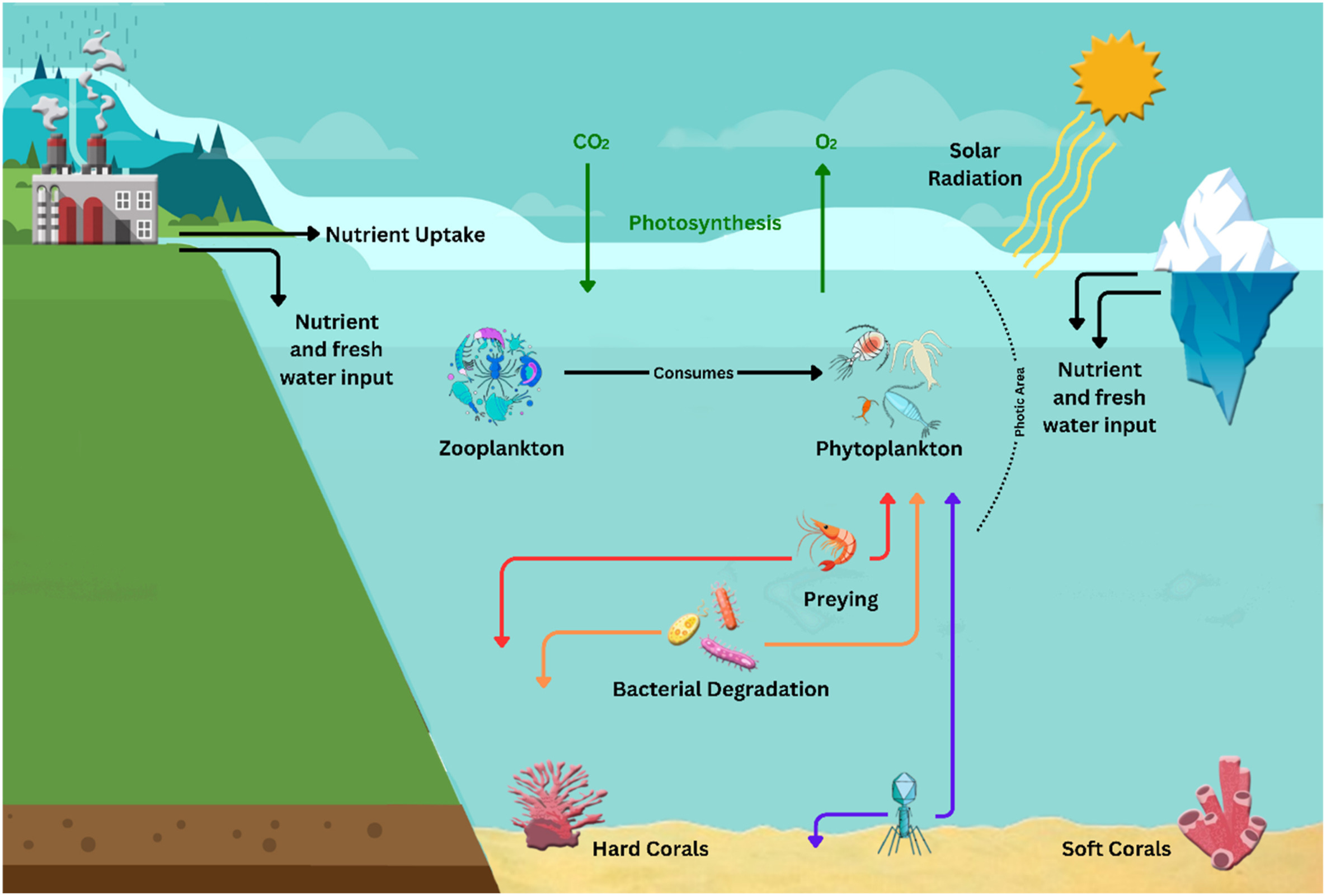 Bayesian-Regularized Cascaded Neural Networks for Fractional Asymmetric Carbon-Thermal Nutrient-Plankton Dynamics Under Global Warming and Climatic Perturbations leadMuhammad Junaid Ali Asif Raja, Adil Sultan, Chuan-Yu Chang, Chi-Min Shu, Adiqa Kausar Kiani, and Muhammad Asif Zahoor RajaEngineering Applications of Artificial Intelligence, 2025
In this study, design of cascaded feedforward neural network optimized with Bayesian Regularization algorithm is deployed to study the nonlinear fractional order system of carbon-thermal nutrient-plankton model asserting the profound ramifications of global warming and climatic alterations on the planktonic populations within the marine biosphere. The fractional differential asymmetric multifactor system is reflected by the carbon dioxide atmospheric concentration, atmospheric temperature, nutrient concentration and planktonic population spatiotemporal dynamics in the ocean. This system is exacted by an efficacious variant of the fractional Adams-Bashforth-Moulton predictor-corrector method across distinct scenarios and fractional orders. These numerically treated datasets are subsequently partitioned into training and testing subsets to model the intricate dynamics of the fractional Plankton system using the cascaded intelligent computational paradigm. The stupendous knacks of the cascaded network framework are evaluated on the sundry fractional nonlinear carbon-thermal nutrient-plankton model scenarios using mean squared error convergence pattern, input-error correlation and error autocorrelation statistics, regression metric, time series response curves, and error histogram studies. The efficacy of the designed cascaded feedforward networks modelling is substantiated by diminutive training mean square error discrepancies, spanning from 10-11 to 10-15 across all the complex nonlinear fractional plankton cases. Furthermore, comparative analysis and absolute error visualizations reveal that the designed neural strategy effectively delineates the carbon-thermal nutrient-plankton dynamics as evidenced by the errors spanning from 10-05 to 10-08. These empirical results showcase that the neurocomputing strategy is robust in characterizing the intricate and complex nutrient-plankton dynamics in marine ecosystems under global warming and climatic perturbations.
@article{raja2025bayesian, title = {Bayesian-Regularized Cascaded Neural Networks for Fractional Asymmetric Carbon-Thermal Nutrient-Plankton Dynamics Under Global Warming and Climatic Perturbations}, keywords = {ecological}, author = {Raja, Muhammad Junaid Ali Asif and Sultan, Adil and Chang, Chuan-Yu and Shu, Chi-Min and Kiani, Adiqa Kausar and Raja, Muhammad Asif Zahoor}, journal = {Engineering Applications of Artificial Intelligence}, year = {2025}, doi = {10.1016/j.engappai.2025.110739}, } - Water Res.
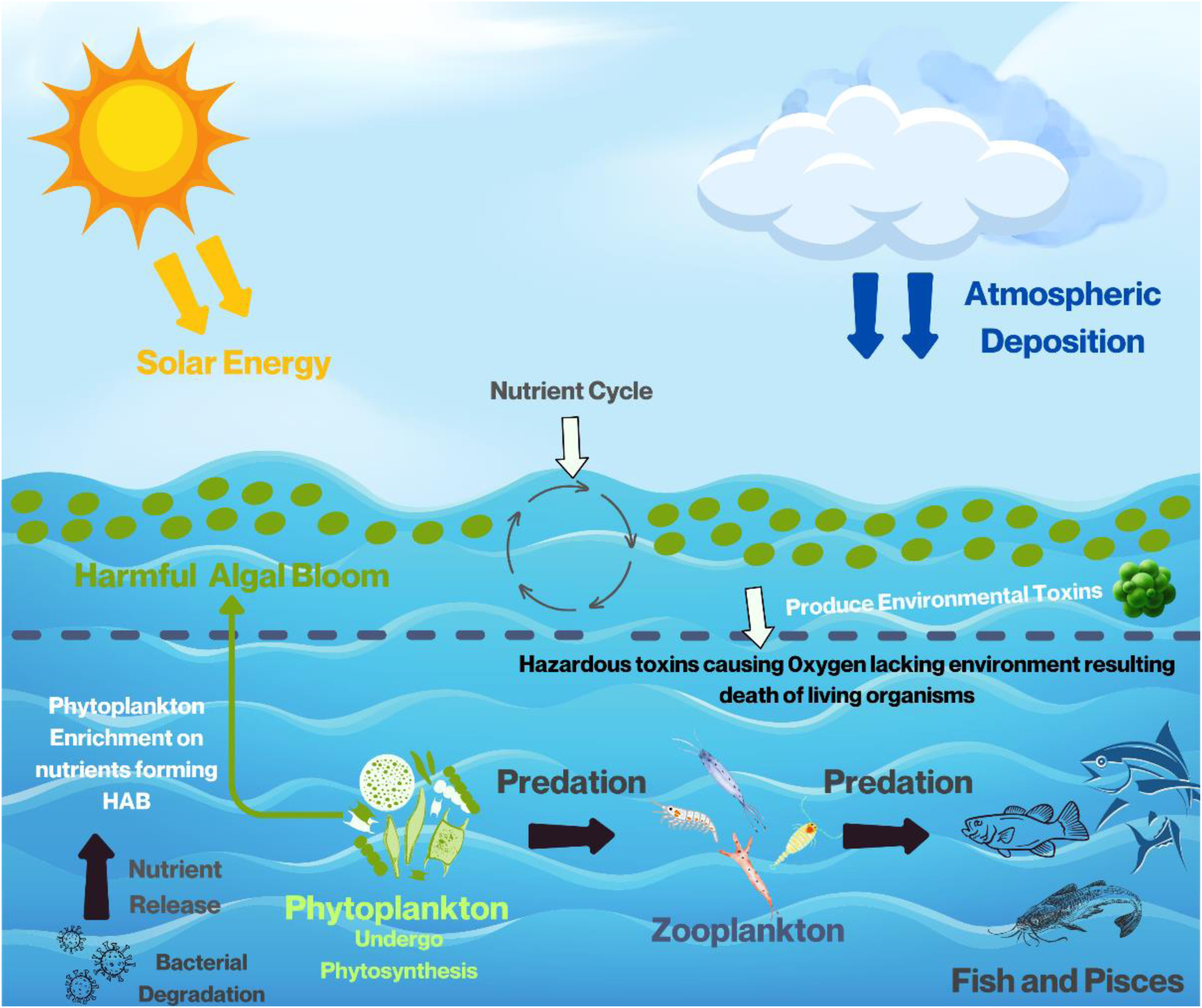 Design of a Fractional-Order Environmental Toxin-Plankton System in Aquatic Ecosystems: A Novel Machine Predictive Expedition with Nonlinear Autoregressive Neuroarchitectures leadMuhammad Junaid Ali Asif Raja, Adil Sultan, Chuan-Yu Chang, Chi-Min Shu, Muhammad Shoaib, Adiqa Kausar Kiani, and Muhammad Asif Zahoor RajaWater Research, 2025
Artificial intelligence has transformed both plankton dynamics and hazardous material management under toxic environments by enhanced hazard prediction in detecting how toxins affect plankton population and potentially uncovering greater depth of ecological insights. In proposed study, nonlinear autoregressive exogenous neural network coupled with Levenberg-Marquardt is efficaciously selected to model fractional order toxin plankton (FOTP) system asserting the phytoplankton and zooplankton dynamics in aquatic environment under influence of environmental toxins. The fractional differential ecological TP system incorporates density population of phytoplankton, zooplankton and environmental toxins exacted by fractional Adams multistep predictor-corrector method across arbitrary fractional order cases varying intrinsic growth rates of phytoplankton and zooplankton, zooplankton carrying capacity, phytoplankton toxin release, fish predation parameters (half-saturation constant and maximum rate), environmental toxin depletion, and dynamic phytoplankton carrying capacity. Synthetic datasets were split into training, testing, and validation subsets to model the FOTP system using an intelligent neurocomputing paradigm. The proficiency of the selected neural networks is demonstrated by performance metrics – MSE convergence, time-series fitness patterns, regression reports, error histograms and correlation analyses – while comparative analysis with numerical outcomes and absolute error plots underscores the robustness and stability of the neurocomputing architecture. Rigorous analysis on single step and multistep ahead predictors with error of order 10-5 further highlights the efficacy of employed neurocomputing design for optimal and precise forecasting of intricate FOTP system dynamics. This study demonstrates that intelligent computing can effectively forecast FOTP dynamics and serve as a framework for addressing aquatic ecological hazards.
@article{raja2025toxin, title = {Design of a Fractional-Order Environmental Toxin-Plankton System in Aquatic Ecosystems: A Novel Machine Predictive Expedition with Nonlinear Autoregressive Neuroarchitectures}, keywords = {ecological}, author = {Raja, Muhammad Junaid Ali Asif and Sultan, Adil and Chang, Chuan-Yu and Shu, Chi-Min and Shoaib, Muhammad and Kiani, Adiqa Kausar and Raja, Muhammad Asif Zahoor}, journal = {Water Research}, year = {2025}, doi = {10.1016/j.watres.2025.123640}, } - CNSNS
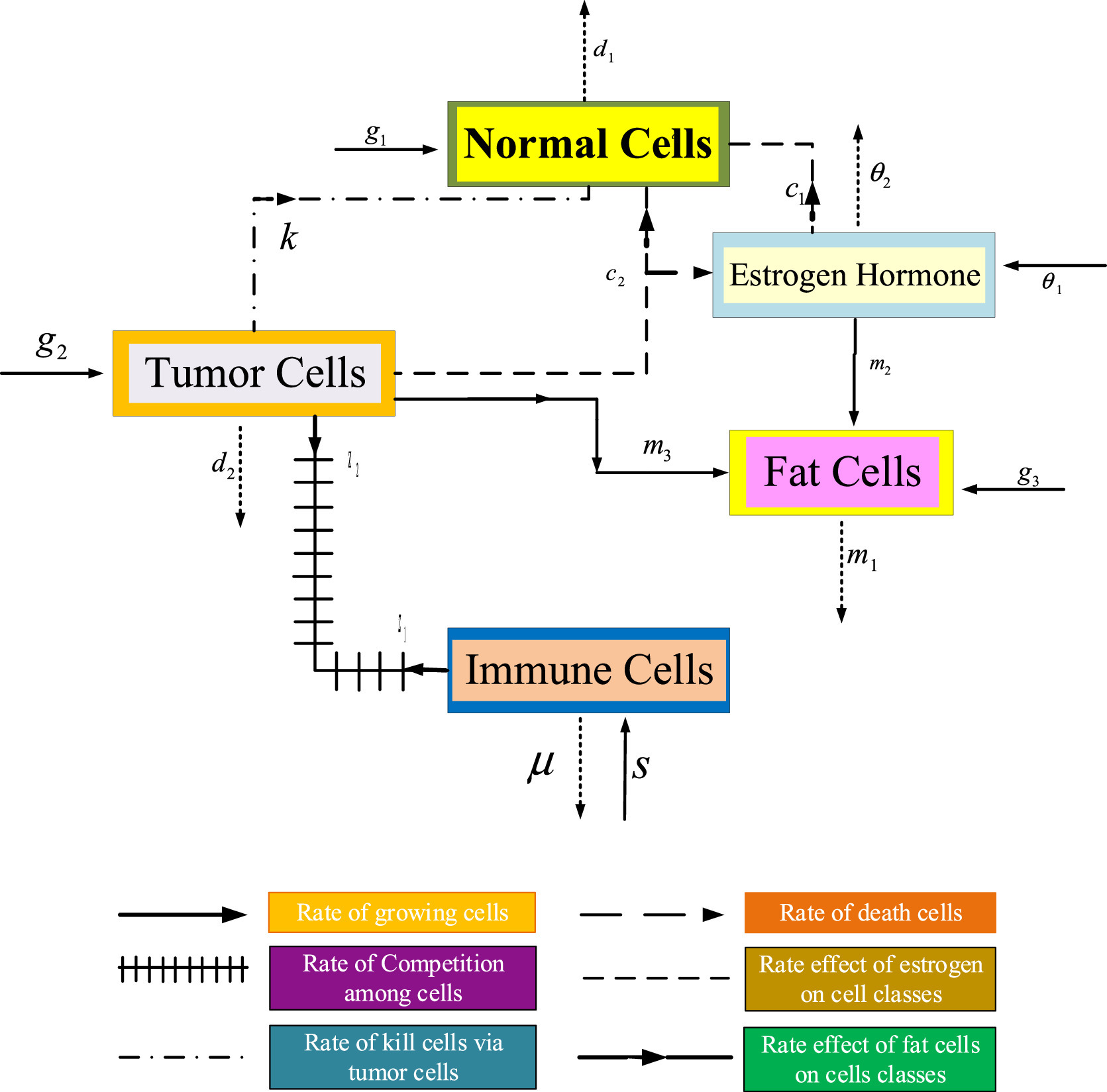 Novel Intelligent Exogenous Neuro-Architecture-Driven Machine Learning Approach for Nonlinear Fractional Breast Cancer Risk SystemAfshan Fida, Muhammad Asif Zahoor Raja, Chuan-Yu Chang, Muhammad Junaid Ali Asif Raja, Zeshan Aslam Khan, and Muhammad ShoaibCommunications in Nonlinear Science and Numerical Simulation, 2025
Breast cancer remains one of the most prevalent and life-threatening diseases worldwide, necessitating mathematical modelling frameworks to capture the complexity of its progression and risk factors. This research endeavor uncovers the novel machine learning expedition using an Adaptive Nonlinear AutoRegressive eXogenous (ANARX) neural network on a Fractional Order Breast Cancer Risk (FO-BCR) model. A novel Caputo fractional operator-based breast cancer risk model is presented using a five compartmental system reflected by healthy, tumor, immune, estrogen, and fatty cells. A modified fractional Adams PECE method is opted to generate solutions of the five fractional order variants on the four diverse BCR scenarios. These temporal sequences are parsed as ground truth for the adept ANARX network, which is iteratively refined using the Levenberg-Marquardt (LM) algorithm. The performance evaluation of the temporal feature learning of the ANARX-LM algorithm is comprehensively evaluated against reference numerical outcomes using mean square error (MSE) performance graphics, input-error cross correlation, error autocorrelation, error histogram analysis, sequential response and comparative error analysis charts. Low disparity between reference solutions is observed for all FO-BCR systems, with MSE errors in the range of 10-8 to 10-11. Finally, the ANARX-LM’s predictive prowess is evaluated using the single and multistep configurations. Minute errors in the range of 10-9 to 10-11, 10-8 to 10-10 suggest accurate anticipation of the FO-BCR system enabling preventive and prognostic measures for breast cancer models. These empirical findings underscore the potential of advanced machine-learning-driven neuro-architecture for next-generation predictive-oncology solutions that may facilitate treatment strategies.
@article{fida2025breast, title = {Novel Intelligent Exogenous Neuro-Architecture-Driven Machine Learning Approach for Nonlinear Fractional Breast Cancer Risk System}, keywords = {biomedical}, author = {Fida, Afshan and Raja, Muhammad Asif Zahoor and Chang, Chuan-Yu and Raja, Muhammad Junaid Ali Asif and Khan, Zeshan Aslam and Shoaib, Muhammad}, journal = {Communications in Nonlinear Science and Numerical Simulation}, year = {2025}, doi = {10.1016/j.cnsns.2025.108955}, } - Biomed. Signal
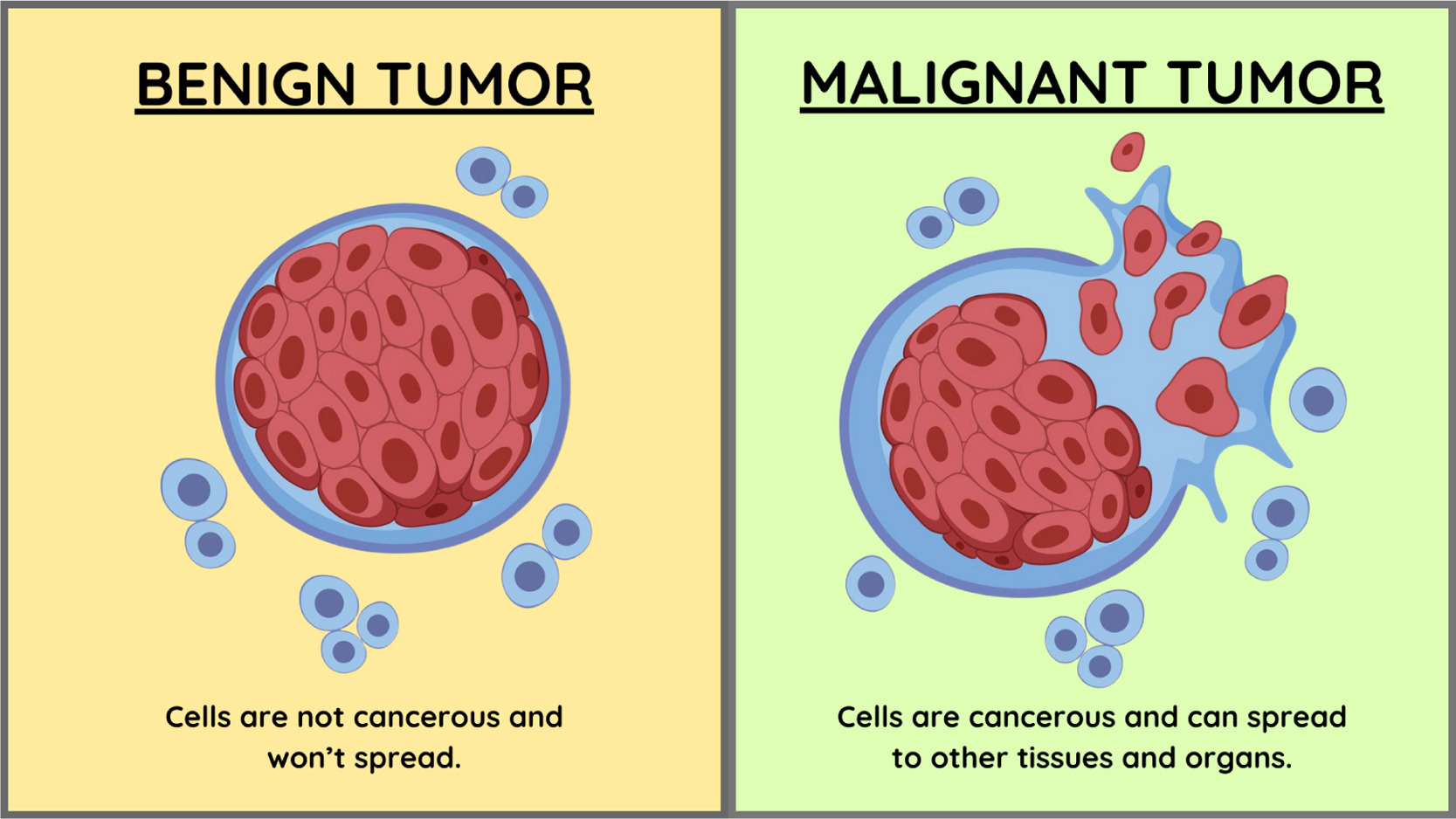 Supervised Autoregressive eXogenous Networks with Fractional Grünwald-Letnikov Finite Differences: Tumor Evolution and Immune Responses Under Therapeutic Influence Fractals ModelHassan Raza, Muhammad Junaid Ali Asif Raja, Rikza Mubeen, Zaheer Masood, and Muhammad Asif Zahoor RajaBiomedical Signal Processing and Control, 2025
Modeling malignant disease with immune retorts under therapeutic influence using fractional calculus and recurrent time-delay neural networks is an innovative approach that combines mathematical modeling with machine learning techniques to model inherent complexity of tumor behavior and forecasting of accurate therapeutic dosing timeline. Fractional aspect captures the memory effect of multifaceted tumor cells growth and artificial intelligence predicts treatment methodology such as drug dosing and help doctors to develop more effective and targeted treatments. This study develops a highly reliable and precise application of artificial intelligence-based methodology that utilize the insights, derived from fractional calculus to predict the tumor immune response to treatment, including optimal timing and drug dosing strategies. The utilization of recurrent time-delay neural networks in modeling malignant disease emerges as a beacon of innovation and computational sophistication. Grunwald-Letnikov (GL) based fractional solver is used to generate the synthetic data set for training, validation and testing of the designed neural networks methodology. To ascertain the genuineness and performance of the designed framework, a rigorous error analysis of different cases was performed. The accuracy and performance of the framework are further achieved in term of mean square error, meticulously optimized through iterative learning, regression metrics, cross-correlation, autocorrelation and histogram analysis.
@article{raza2025tumor, title = {Supervised Autoregressive eXogenous Networks with Fractional Gr{\"u}nwald-Letnikov Finite Differences: Tumor Evolution and Immune Responses Under Therapeutic Influence Fractals Model}, keywords = {biomedical}, author = {Raza, Hassan and Raja, Muhammad Junaid Ali Asif and Mubeen, Rikza and Masood, Zaheer and Raja, Muhammad Asif Zahoor}, journal = {Biomedical Signal Processing and Control}, year = {2025}, doi = {10.1016/j.bspc.2025.107871}, } - Comput. Biol. Med.
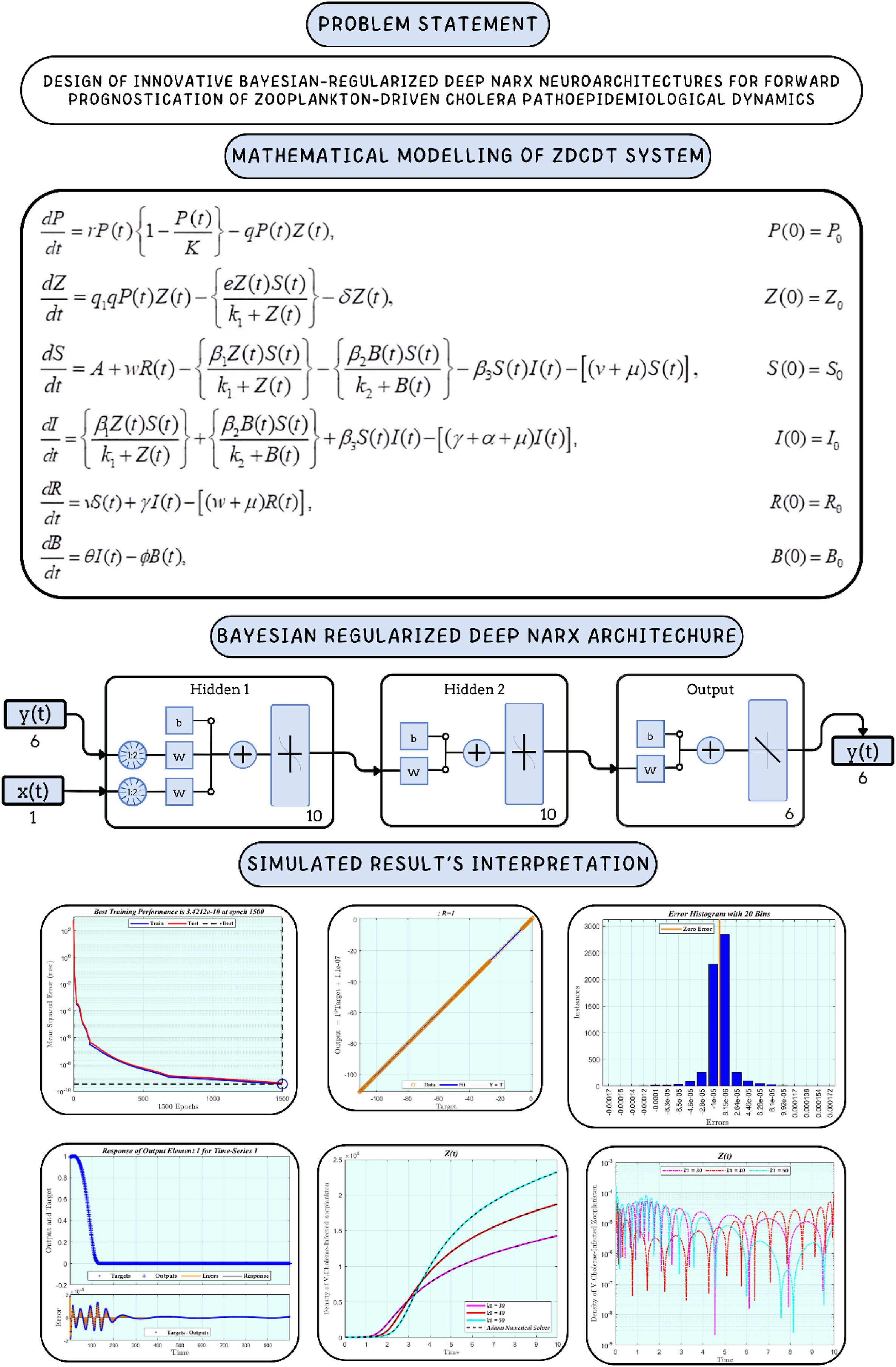 Prognostication of Zooplankton-Driven Cholera Patho-Epidemiological Dynamics: Novel Bayesian-Regularized Deep NARX Neuroarchitecture leadMuhammad Junaid Ali Asif Raja, Adil Sultan, Chuan-Yu Chang, Chi-Min Shu, Adiqa Kausar Kiani, Muhammad Shoaib, and Muhammad Asif Zahoor RajaComputers in Biology and Medicine, 2025
Cholera outbreaks pose significant health concerns, particularly through freshwater contamination through zooplankton serving as reservoirs for Vibrio Cholerae. Understanding these complex interactions within the aquatic ecosystem through mathematical modeling regimes may help us predict and prevent the spread of Cholera disease spread in affected regions. In this study, an innovative Bayesian regularized deep nonlinear autoregressive exogenous (BRDNARX) neural networks are employed to model the intricate dynamics of Zooplankton-Driven Cholera Disease Transmission (ZDCDT) system. The cholera epidemic propagation through freshwater contamination is uncovered with analysis on densities of phytoplankton, vibrio cholerae carrying zooplankton, human population vector and microbial pathogen vector populous in the marine biosphere. Synthetic data for the ZDCDT is presented for diverse simulations using a modified Adams-Bashforth-Moulton predictor corrector numerical scheme. Subsequently, these temporal data sequences are preprocessed for the novel BRDNARX computing paradigm with an exhaustive assessment on mean square error iterative convergence plots, error histogram charts, regression index reports, input-error crosscorrelation charts, error autocorrelation charts, and time-series response dynamics. Comparative absolute error analysis with reference numerical solution adheres to diminutive disparities of range 10-3 to 10-9. Finally, BRDNARX neurostructures are reconfigured for predictive analysis of ZDCDT system in terms of single and multi-step ahead predictors with mean square error outcomes that range from 10-9 to 10-11. This establishes the efficacy of BRDNARX in correctly adhering to the intricacies of the zooplankton-driven cholera pathoepidemiological dynamics with precise forward prognostication.
@article{raja2025cholera, title = {Prognostication of Zooplankton-Driven Cholera Patho-Epidemiological Dynamics: Novel Bayesian-Regularized Deep NARX Neuroarchitecture}, keywords = {ecological;biomedical}, author = {Raja, Muhammad Junaid Ali Asif and Sultan, Adil and Chang, Chuan-Yu and Shu, Chi-Min and Kiani, Adiqa Kausar and Shoaib, Muhammad and Raja, Muhammad Asif Zahoor}, journal = {Computers in Biology and Medicine}, year = {2025}, doi = {10.1016/j.compbiomed.2025.110197}, } - Chaos Solit.
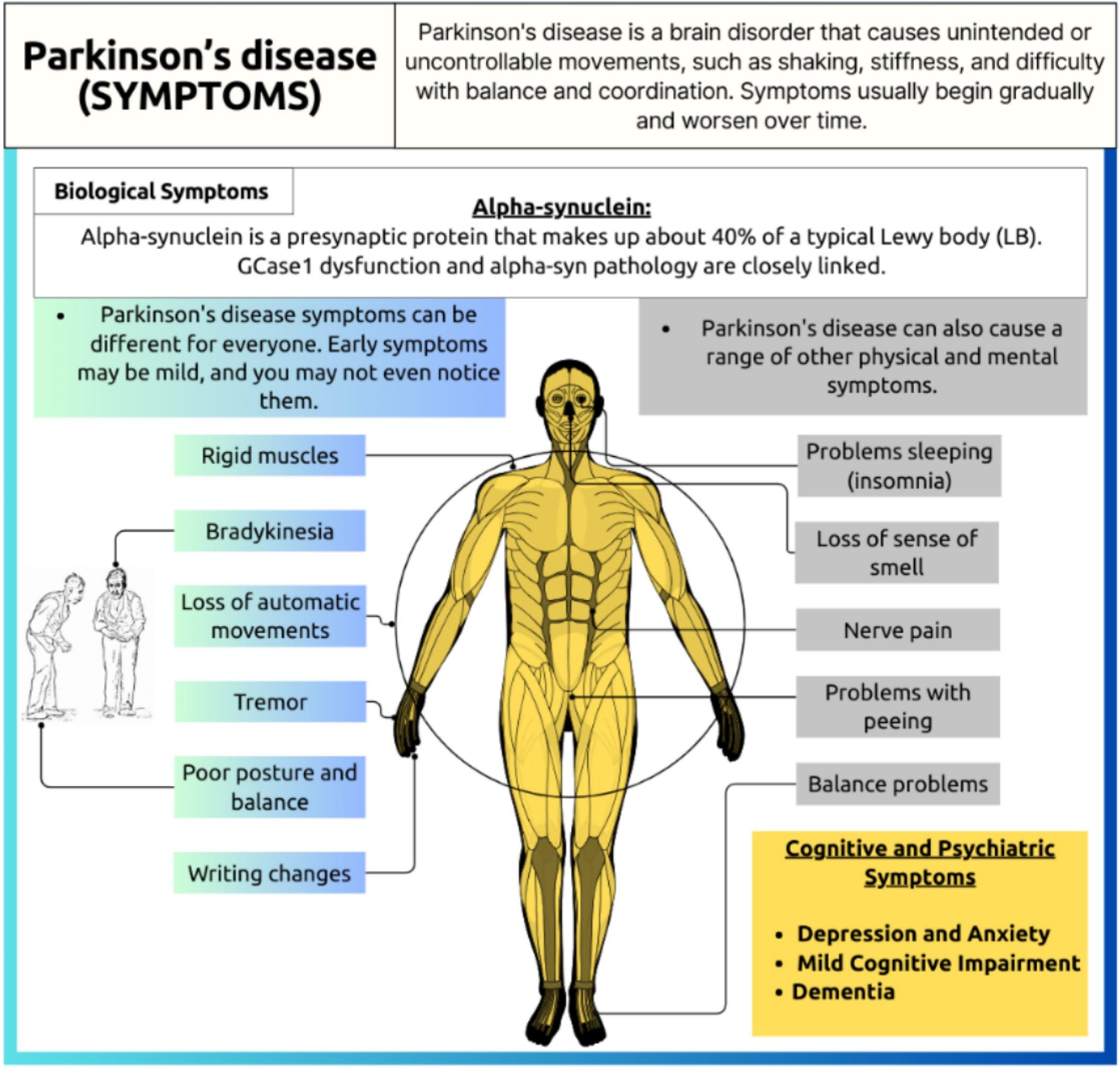 A Novel Fractional Parkinson’s Disease Onset Model Involving α-Syn Neuronal Transportation and Aggregation: A Treatise on Machine Predictive NetworksRoshana Mukhtar, Chuan-Yu Chang, Aqib Mukhtar, Muhammad Junaid Ali Asif Raja, Naveed Ishtiaq Chaudhary, Zeshan Aslam Khan, and Muhammad Asif Zahoor RajaChaos, Solitons & Fractals, 2025
Artificial intelligence plays a crucial role in medical care by enhancing diagnostic accuracy, personalizing treatment plans, and streamlining administrative processes, ultimately improving patient outcomes and operational efficiency. Additionally, it aids in predictive analytics, helping to identify potential health issues before they become critical. This paper presents a novel fractional mathematical model for α-syn transport and aggregation in neurons leading to the onset of Parkinson’s disease (α-syn-TAN-OPD). A Nonlinear Autoregressive Exogenous (input) Neural Network optimized with Levenberg Marquardt Backpropagation technique (NARX-NN-LMBT) is expertly deployed on the fractional α-syn-TAN-OPD model. Fractional Adams-Bashforth-Moulton numerical scheme is deployed to generate three scenarios with five different fractional order cases each by varying α-syn synthesis rate, monomeric α-syn concentration decay, and misfolded α-syn production rate. These synthetic datasets are passed to the NARX-NN-LMBT to simulate, model, and anticipate the α-syn-TAN-OPD scenarios. The NARX-NN-LMBT technique is validated using mean squared error (MSE), root MSE, normalized MSE and mean absolute error performance evaluations. Graphical descriptions of regression indices, error-input cross correlation, error autocorrelation, error histograms further detail the prowess of the NARX-NN-LMBT technique for the accurate modeling of α-syn-TAN-OPD cases. A comparative analysis is drawn between the numerical scheme and the NARX-NN-LMBT with mean absolute error lying between the ranges of 10-7 to 10-8. NARX-NN-LMBT forecasting ability is assessed on single and multiple steps with the MSE lying in the range of 10-13 to 10-16.
@article{mukhtar2025parkinson, title = {A Novel Fractional Parkinson's Disease Onset Model Involving {$\alpha$}-Syn Neuronal Transportation and Aggregation: A Treatise on Machine Predictive Networks}, keywords = {neuronal;biomedical}, author = {Mukhtar, Roshana and Chang, Chuan-Yu and Mukhtar, Aqib and Raja, Muhammad Junaid Ali Asif and Chaudhary, Naveed Ishtiaq and Khan, Zeshan Aslam and Raja, Muhammad Asif Zahoor}, journal = {Chaos, Solitons \& Fractals}, year = {2025}, doi = {10.1016/j.chaos.2025.116269}, } - Chaos Solit.
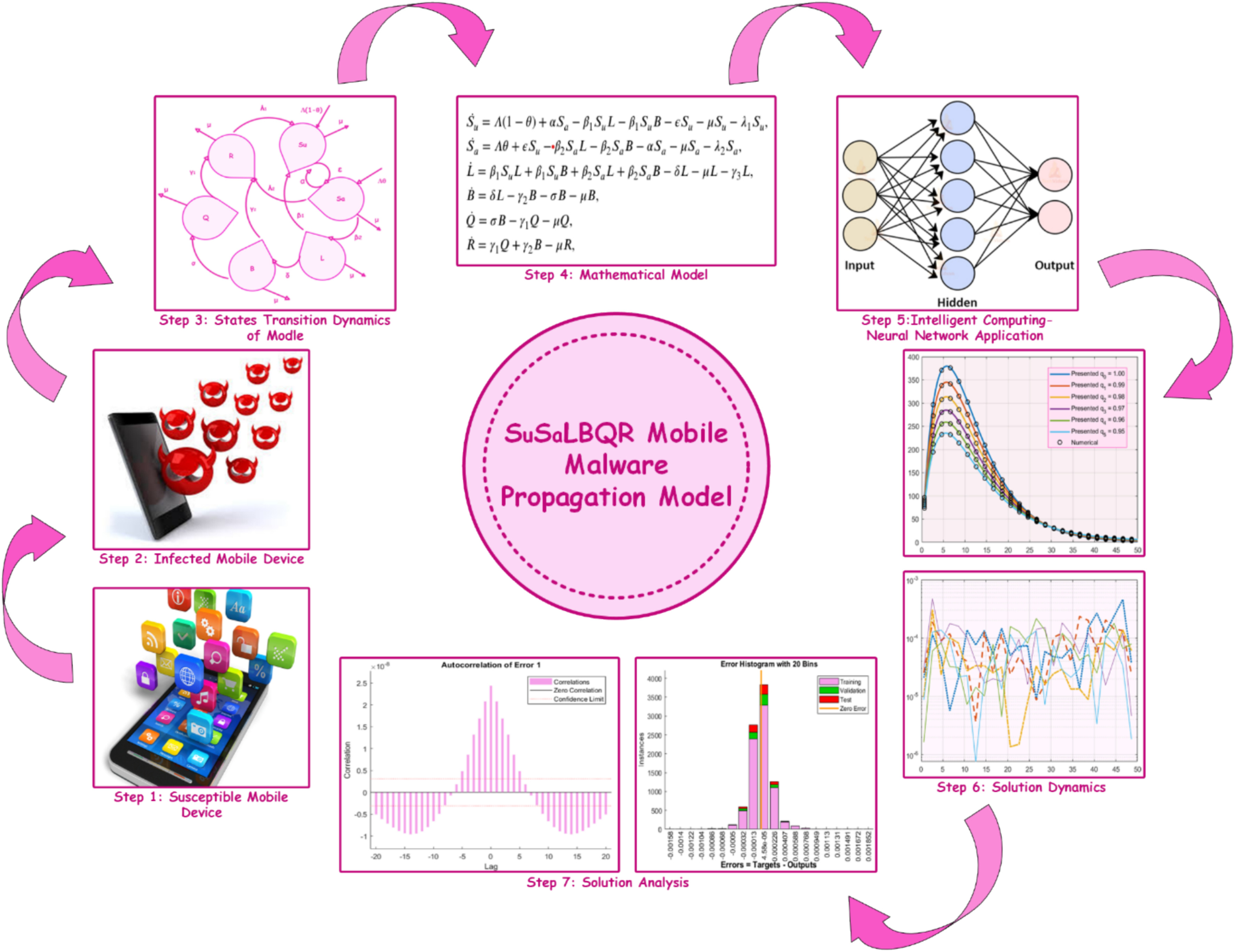 Machine Learning-Driven Exogenous Neural Architecture for Nonlinear Fractional Cybersecurity Awareness Model in Mobile Malware PropagationKiran Asma, Muhammad Asif Zahoor Raja, Chuan-Yu Chang, Muhammad Junaid Ali Asif Raja, and Muhammad ShoaibChaos, Solitons & Fractals, 2025
A vulnerable mobile device remains a critical concern for the sustainable development of information security infrastructure, and the massive increase in mobile malware propagation further amplifies the need for heightened cybersecurity awareness among mobile users. In this paper, a novel framework is presented to explore the machine learning solutions for nonlinear fractional cybersecurity awareness on mobile malware propagation (NFCSA-MMP) model by constructing multilayer autoregressive exogenous networks (MARXNs) trained iteratively by the Levenberg-Marquardt (MARXNs-LM) algorithm. The NFCSA-MMP system represented with Unaware-Susceptible, Aware-Susceptible, Latent, Breakout, Quarantine and Recovery fractional compartments models the different stages of mobile devices states during malware propagation and recovery. To scrutinize the propagation mechanism of mobile malware, the simulation data generated by utilizing Grunwald-Letnikov (GL) fractional finite difference-based computing procedure for NFCSA-MMP model for both integer and fractional ordered values corresponding to variation in the rate of security-aware mobile devices connected to a network, the rate of latent mobile devices becomes breakout, and the recovery rates of latent, breakout, and quarantined devices due to treatment. The proposed methodology MARXNs-LM is executed on acquired datasets randomly sectioned into training, testing and validation samples by achieving the minimum value of the mean square error (MSE) to determine the machine predictive solution of NFCSA-MMP for each scenario. The vigorousness of proposed MARXNs-LM scheme proven by comparative analysis on convergence trends on reduction of MSE, magnitude of absolute deviation, input-output correlation, error histograms and error autocorrelation statistics for solving stiff NFCSA-MMP model.
@article{asma2025malware, title = {Machine Learning-Driven Exogenous Neural Architecture for Nonlinear Fractional Cybersecurity Awareness Model in Mobile Malware Propagation}, keywords = {security}, author = {Asma, Kiran and Raja, Muhammad Asif Zahoor and Chang, Chuan-Yu and Raja, Muhammad Junaid Ali Asif and Shoaib, Muhammad}, journal = {Chaos, Solitons \& Fractals}, year = {2025}, doi = {10.1016/j.chaos.2024.115948}, } - Biomed. Signal
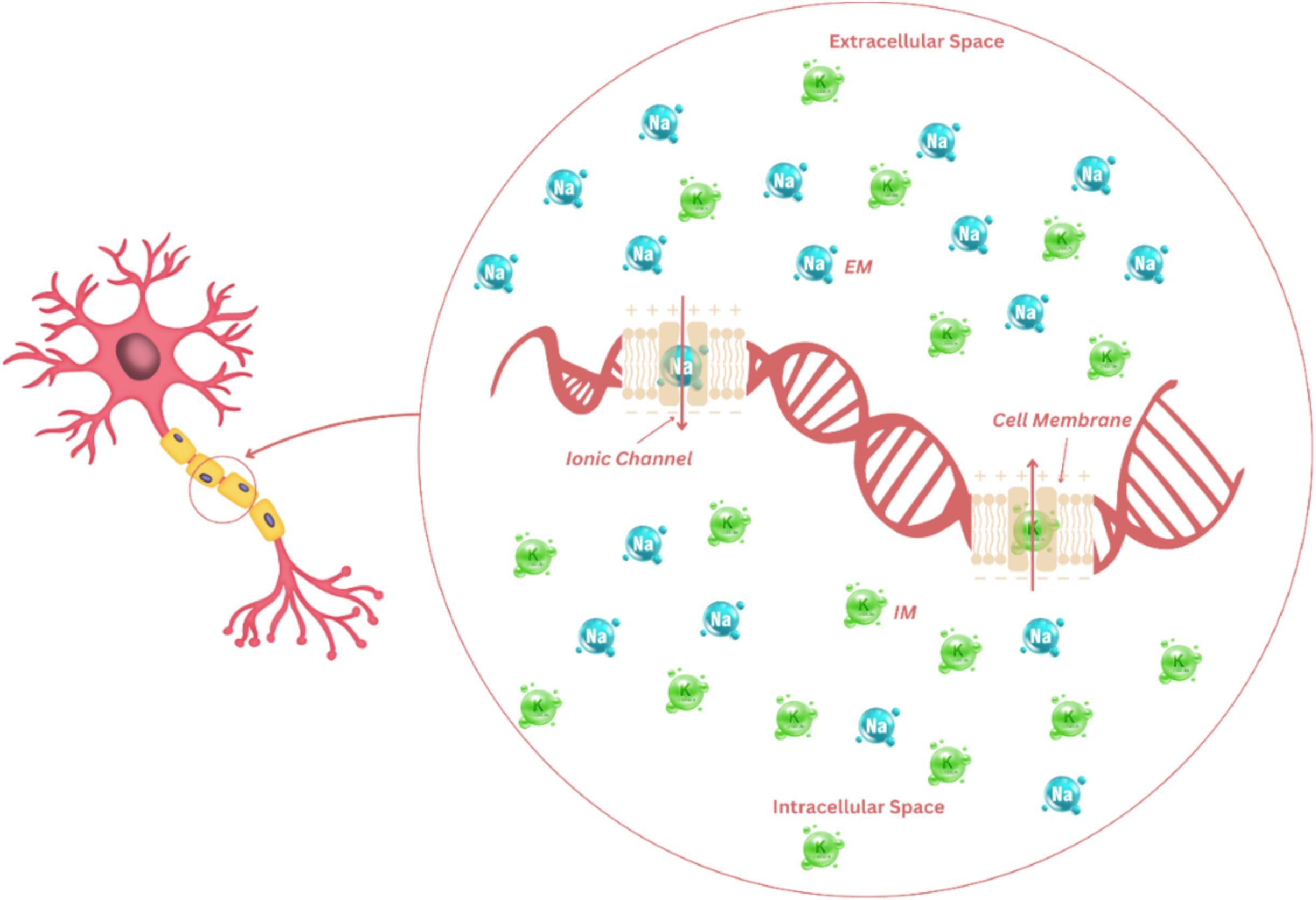 Design of Intelligent Bayesian-Regularized Deep Cascaded NARX Neurostructure for Predictive Analysis of FitzHugh-Nagumo Bioelectrical Model in Neuronal Cell Membrane leadMuhammad Junaid Ali Asif Raja, Shahzaib Ahmed Hassan, Chuan-Yu Chang, Chi-Min Shu, Adiqa Kausar Kiani, Muhammad Shoaib, and Muhammad Asif Zahoor RajaBiomedical Signal Processing and Control, 2025
The electrophysiological modelling paradigm unravels the complex oscillatory and excitable behaviors inherent to neural dynamics, with the FitzHugh-Nagumo model – rooted in the reductionist abstraction of Hodgkin-Huxley formalism – providing a quintessential framework for exploring the underpinnings of action potential propagation and diverse phase plane dynamics characterizing excitable membranes. The objective of this study is to present the novel intelligent computing-based Bayesian regularized multilayered deep dual cascaded nonlinear autoregressive exogenous neurostructure to model and predict the intricate dynamics of FitzHugh-Nagumo model. The numerical treatment of the FitzHugh-Nagumo (FHN) model is handled with a modified Adams-Bashforth-Moulton predictor-corrector method for three sundry scenarios encompassing the oscillatory, excitable, and bistable dynamics. These simulated temporal sequences are arbitrarily divided into training and test sets for Deep Cascaded NARX neural networks, with backpropagated refinement using the Bayesian regularization technique (DC-NARX-BR). This novel strategy is verified across reference numerical outcomes with the help of diversified evaluation metrics including mean squared error convergence plots, error histogram analysis, error regression metrics, input-error cross-correlation, and error autocorrelation plots. Comparative analysis charts present the efficacious use of the DC-NARX intelligent computing paradigm with absolute errors ranging from 10-5 to 10-12. Predictive intelligence of the step ahead DC-NARX-BR strategy is observed for the intricate FHN model dynamics with marginal deviances from realized behavior. These diminutive errors can be comprehended by the low MSE losses in the range 10-2–10-5. Exhaustive experimentational averages validate the robustness of DC-NARX intelligent computing paradigm for the correct integration with the complex bioelectrical phenomena occurring within a neuronal cell membrane.
@article{raja2025fitzhugh, title = {Design of Intelligent Bayesian-Regularized Deep Cascaded NARX Neurostructure for Predictive Analysis of FitzHugh-Nagumo Bioelectrical Model in Neuronal Cell Membrane}, keywords = {neuronal}, author = {Raja, Muhammad Junaid Ali Asif and Hassan, Shahzaib Ahmed and Chang, Chuan-Yu and Shu, Chi-Min and Kiani, Adiqa Kausar and Shoaib, Muhammad and Raja, Muhammad Asif Zahoor}, journal = {Biomedical Signal Processing and Control}, year = {2025}, doi = {10.1016/j.bspc.2024.107192}, } - Process Saf.
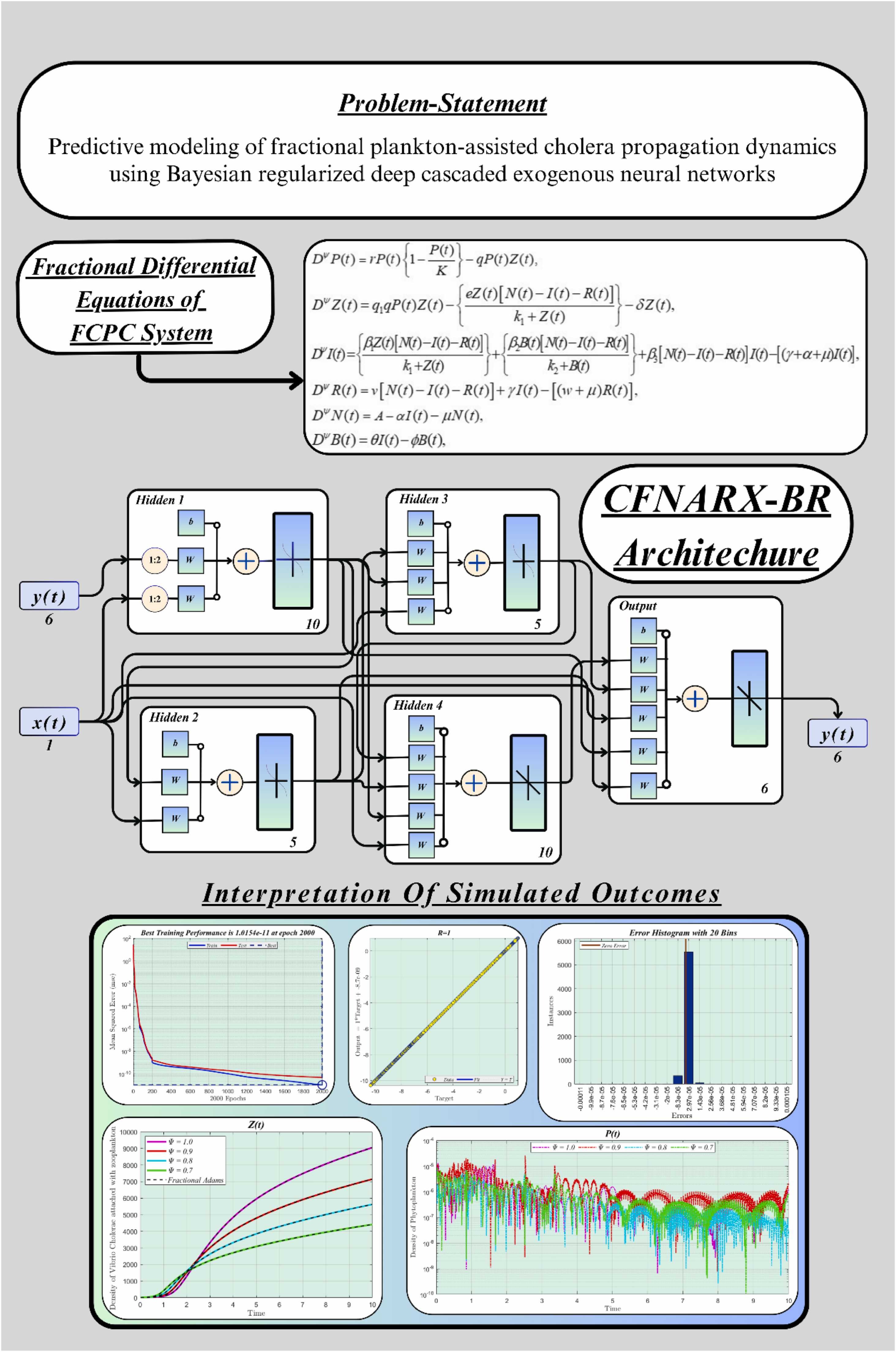 Predictive Modeling of Fractional Plankton-Assisted Cholera Propagation Dynamics Using Bayesian-Regularized Deep Cascaded Exogenous Neural NetworksAdil Sultan, Muhammad Junaid Ali Asif Raja, Chuan-Yu Chang, Chi-Min Shu, Adiqa Kausar Kiani, and Muhammad Asif Zahoor RajaProcess Safety and Environmental Protection, 2025
Cholera infectious disease spread through water sanitation containing zooplankton carrying Vibrio Cholerae is a significant global threat, underscoring the urgent need for effective prevention through mathematical simulation regimes. In this study, novel quad-layered deep cascaded feed-forward nonlinear autoregressive exogenous (CFNARX) neural networks optimized with Bayesian regularization (BR) technique are employed to model fractional plankton-assisted cholera propagation (FPCP) system declaring the transmission of Vibrio Cholerae infested on zooplanktons into sanitation system of human society. The fractional differential epidemiological model incorporating density of phytoplankton, density of Vibrio Cholerae infected on zooplankton, number of infected human population with cholerae, number of recovered human population from cholerae, total number of human population and concentration of free-living Vibrio Cholerae exacted by a fractional Adams-Bashforth-Moulton predictor-corrected method across sundry scenarios comprising different fractional order values. The synthetic datasets are partitioned into training and testing sub-sets to model intricate dynamics of FPCP by means of a novel CFNARX-BR computing paradigm. The adept aptitudes of designed neural networks are assessed on diverse FPCP system scenarios using mean squared error (MSE) converging patterns, error-input correlations and error auto-correlation analytics, error regression analysis, time-series response plots, and error histogram studies. The forecasted outcomes of CFNARX-BR paradigm are compared with reference numerical outcomes through comparison charts and absolute error analysis. The minute deviations of CFNARX-BR outcomes reflected by MSE, ranging from 10-11 to 10-12, across all complex FPCP system cases affirming the robustness of the devised intelligent computing schematic. Furthermore, the absolute error analysis reveals minute deviations of the order 10-5 to 10-7, thereby reflecting the adept utilization of an efficient neurocomputing technique to model the fractional ecological-epidemiological differential models.
@article{sultan2025plankton, title = {Predictive Modeling of Fractional Plankton-Assisted Cholera Propagation Dynamics Using Bayesian-Regularized Deep Cascaded Exogenous Neural Networks}, keywords = {ecological;biomedical}, author = {Sultan, Adil and Raja, Muhammad Junaid Ali Asif and Chang, Chuan-Yu and Shu, Chi-Min and Kiani, Adiqa Kausar and Raja, Muhammad Asif Zahoor}, journal = {Process Safety and Environmental Protection}, year = {2025}, doi = {10.1016/j.psep.2025.106819}, } - Chaos Solit.
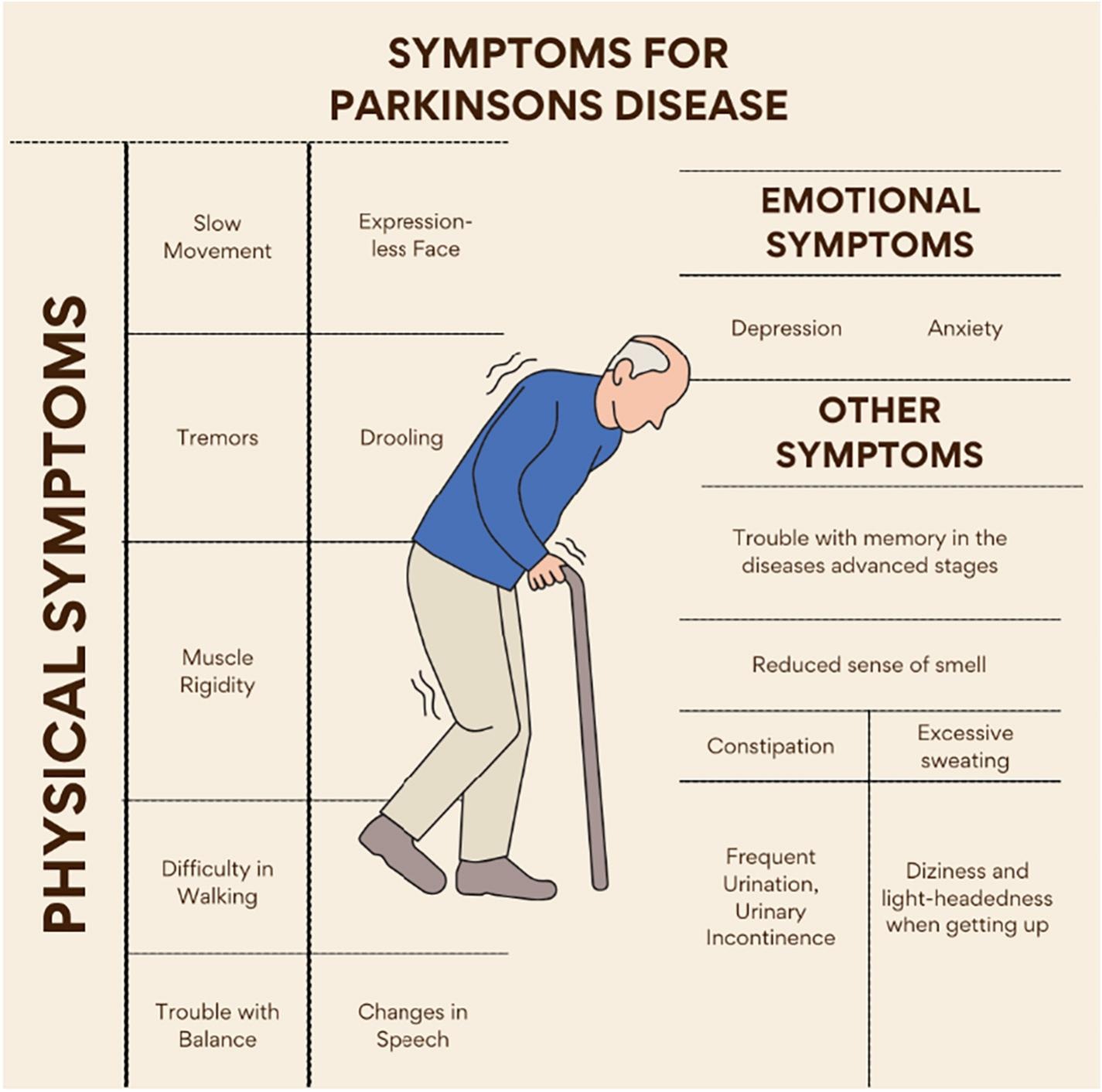 Design of Fractional Innate Immune Response to Nonlinear Parkinson’s Disease Model with Therapeutic Intervention: Intelligent Machine Predictive Exogenous NetworksRoshana Mukhtar, Chuan-Yu Chang, Muhammad Asif Zahoor Raja, Naveed Ishtiaq Chaudhary, Muhammad Junaid Ali Asif Raja, and Chi-Min ShuChaos, Solitons & Fractals, 2025
In this study, a novel application of intelligent machine predictive exogenous neuro-structure optimized with the Levenberg-Marquardt (IMPENS-LM) algorithm is presented to analyze the dynamics of fractional innate immune response to nonlinear Parkinson’s disease propagation considering the impact of therapeutic interventions (PDP-TI). A novel design of the fractional PDP-TI model is constructed with a nonlinear system of five differential compartments representing healthy neurons and infected neurons, extracellular α-syn, and both active and resting microglia. The presented IMPENS is formulated with neuro-structure of nonlinear autoregressive exogenous neural networks with efficient backpropagation of LM algorithm to solve the scenarios of nonlinear fractional PDP-TI model by varying neuron infection rate, survival percentage of α-syn from the death of infected neurons, the density of microglia, infected neurons death rate due to α-syn aggregations, and the ratio of therapeutic approach targeting α-syn with fixed values of annihilation rate of activated microglia, apoptosis rate of neurons and microglia etc. The IMPENS-LM algorithm is operated on synthetic datasets of fractional PDP-TI system generated through the Grunwald-Letnikov fractional finite difference-based numerical computing paradigm for each variant. The sufficient large numerical experimentation is performed with the IMPENS-LM technique to analyze the behavior of the dynamics of the PDP-TI model with the help of different proximity, complexity, and statistical measures in terms of MSE-based iterative fitness learning arcs, absolute error analysis, error autocorrelation plots, and error histograms, to substantiate the efficacy of stochastic solver on sundry fractional orders.
@article{mukhtar2025parkinson2, title = {Design of Fractional Innate Immune Response to Nonlinear Parkinson's Disease Model with Therapeutic Intervention: Intelligent Machine Predictive Exogenous Networks}, keywords = {biomedical}, author = {Mukhtar, Roshana and Chang, Chuan-Yu and Raja, Muhammad Asif Zahoor and Chaudhary, Naveed Ishtiaq and Raja, Muhammad Junaid Ali Asif and Shu, Chi-Min}, journal = {Chaos, Solitons \& Fractals}, year = {2025}, doi = {10.1016/j.chaos.2024.115947}, } - Comput. Biol. Med.
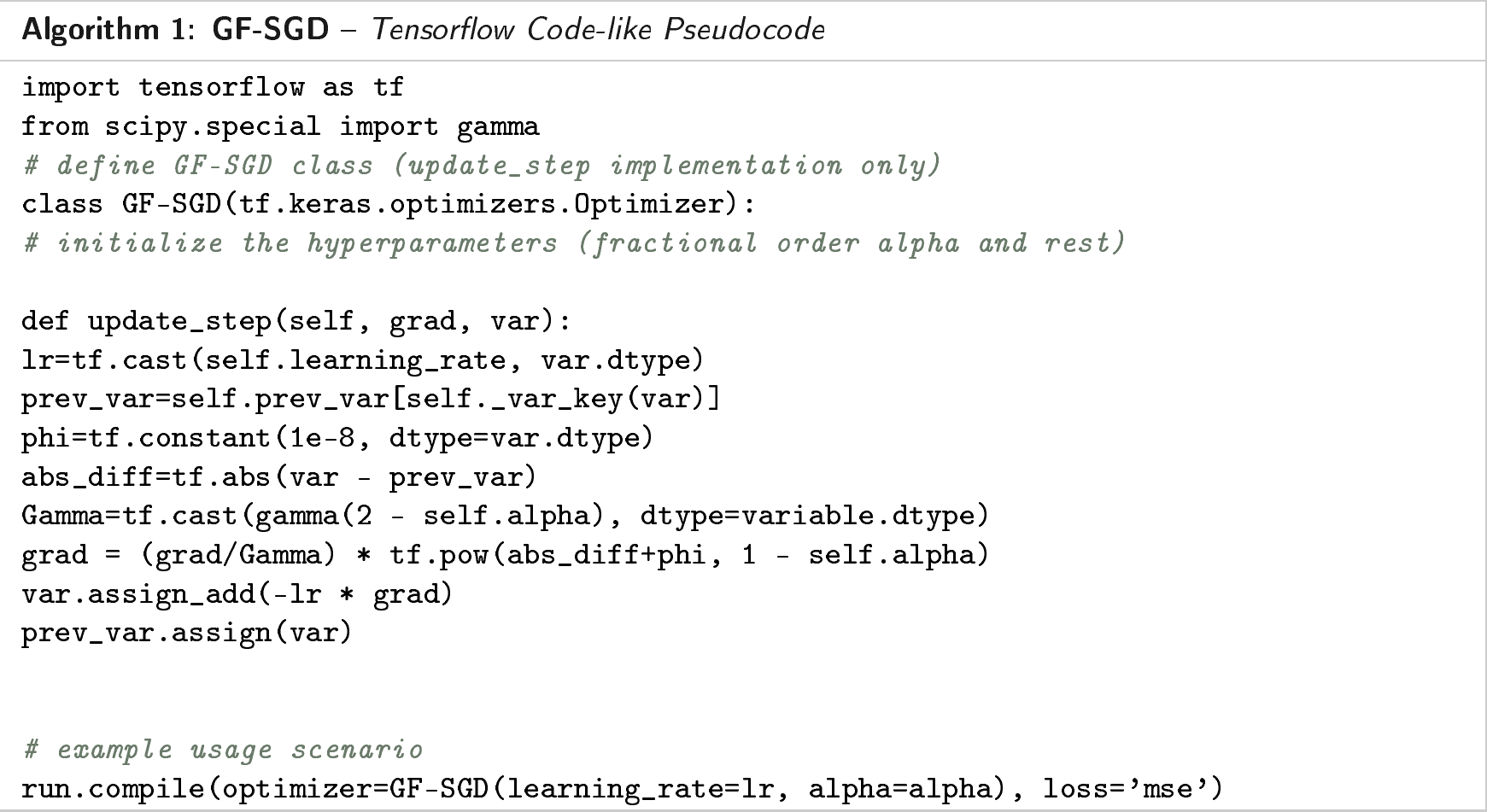 Generalized Fractional Optimization-Based Explainable Lightweight CNN Model for Malaria Disease ClassificationZeshan Aslam Khan, Muhammad Waqar, Muhammad Junaid Ali Asif Raja, Naveed Ishtiaq Chaudhary, Abeer Tahir Mehmood Anwar Khan, Farrukh Aslam Khan, Iqra Ishtiaq Chaudhary, and Muhammad Asif Zahoor RajaComputers in Biology and Medicine, 2025
Over the past few decades, machine learning and deep learning (DL) have incredibly influenced a broader range of scientific disciplines. DL-based strategies have displayed superior performance in image processing compared to conventional standard methods, especially in healthcare settings. Among the biggest threats to global public health is the fast spread of malaria. The plasmodium falciparum infection, the disease origin causes the intestinal illness. Fortunately, advances in artificial intelligence techniques have made it possible to use visual data sets to quickly and effectively diagnose malaria which has also proven to be cost and time effective. In literature, several DL approaches have previously been used with good precision but suffer from computational inefficiency and interpretability. Therefore, this research proposes a generalized fractional order-based explainable lightweight convolutional neural network model to overcome these limitations. The fractional order optimization algorithms have proven worth in terms of estimation accuracy and convergence speed for different applications. The proposed fractional order optimizer-based model offers an improved solution to malaria disease diagnosis with a percentage accuracy of 95 % using the standard NIH dataset and outperforms the existing complex models concerning speed and effectiveness. The proposed fractionally optimized lightweight CNN model has shown substantial performance on the external MP-IDB dataset and M5 test set as well by achieving a generalized test accuracy of 92 % and 90.4 % which verifies the robustness and generalizability of the proposed solution under available circumstances. Moreover, the efficacy of the proposed lightweight architecture is endorsed through evaluation metrics of precision, recall, and F1-score.
@article{khan2025malaria, title = {Generalized Fractional Optimization-Based Explainable Lightweight CNN Model for Malaria Disease Classification}, keywords = {optimization;biomedical}, author = {Khan, Zeshan Aslam and Waqar, Muhammad and Raja, Muhammad Junaid Ali Asif and Chaudhary, Naveed Ishtiaq and Khan, Abeer Tahir Mehmood Anwar and Khan, Farrukh Aslam and Chaudhary, Iqra Ishtiaq and Raja, Muhammad Asif Zahoor}, journal = {Computers in Biology and Medicine}, year = {2025}, doi = {10.1016/j.compbiomed.2024.109593}, } - Comput. Biol. Chem.
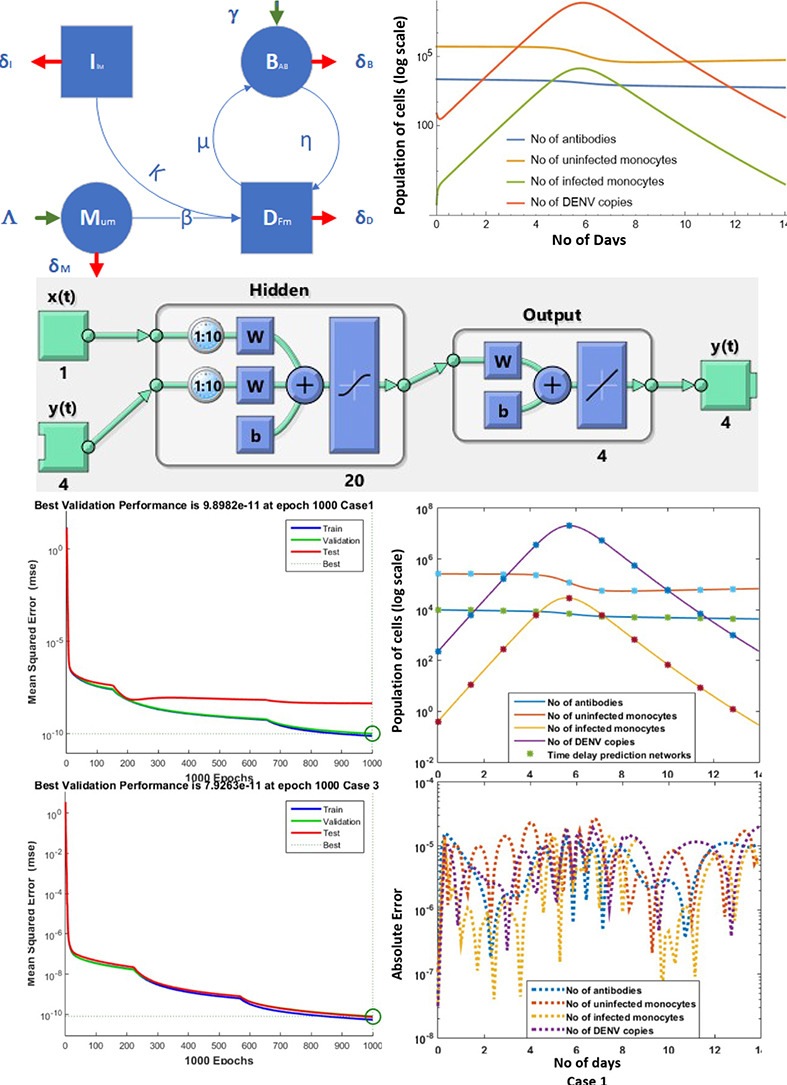 Synergistic Modeling of Hemorrhagic Dengue Fever: Passive Immunity Dynamics and Time-Delay Neural Network AnalysisHassan Raza, Muhammad Junaid Ali Asif Raja, Rikza Mubeen, Zaheer Masood, and Muhammad Asif Zahoor RajaComputational Biology and Chemistry, 2025
Dengue fever poses a formidable epidemiological challenge, particularly for vulnerable groups such as infants. This research paper establishes a mathematical model to describe the dynamics of secondary immunity in infants against dengue hemorrhagic fever, who acquired primary immunity through maternal antibodies. The effect of passive immunity in the form of dengue immunoglobulin is analyzed for high-risk patients for different scenarios, including standard dengue infections, host with pre-existing immunity, delayed diagnosis or treatment, and end-stage dengue cases. Convergence analysis of the model is performed through disease free and disease endemic equilibrium points in terms of basic reproduction number R0 along with local stability of disease-free equilibrium point. Adams numerical approach is utilized to simulate dengue disease/immunity interactions. A time delay exogenous neural network approach coupled with Levenberg-Marquardt optimization is designed to characterize, model and simulate these curated scenarios. Exhaustive neural network procedures determine the efficacy of the neural network approach by means of mean square error (MSE) loss charts, error correlation graphs, error histogram analysis and time-series prediction charts. The impeccable characterization of the dengue fever scenarios is supported by extremely low MSE results of the order 10-9 to 10-11. To further showcase the competency of the neural network predictions, an exhaustive comparative study against the reference numerical solutions is illustrated with absolute errors in the range of 10-3 to 10-5. The novel development of mathematical model coupled with time-delay exogenous neural networks significantly enhances our ability to understand and predict the intricate dengue hemorrhagic fever dynamics allowing for targeted interventions for such infectious disease and epidemiological scenarios.
@article{raza2025dengue, title = {Synergistic Modeling of Hemorrhagic Dengue Fever: Passive Immunity Dynamics and Time-Delay Neural Network Analysis}, keywords = {biomedical}, author = {Raza, Hassan and Raja, Muhammad Junaid Ali Asif and Mubeen, Rikza and Masood, Zaheer and Raja, Muhammad Asif Zahoor}, journal = {Computational Biology and Chemistry}, year = {2025}, doi = {10.1016/j.compbiolchem.2025.108365}, } - Process Saf.
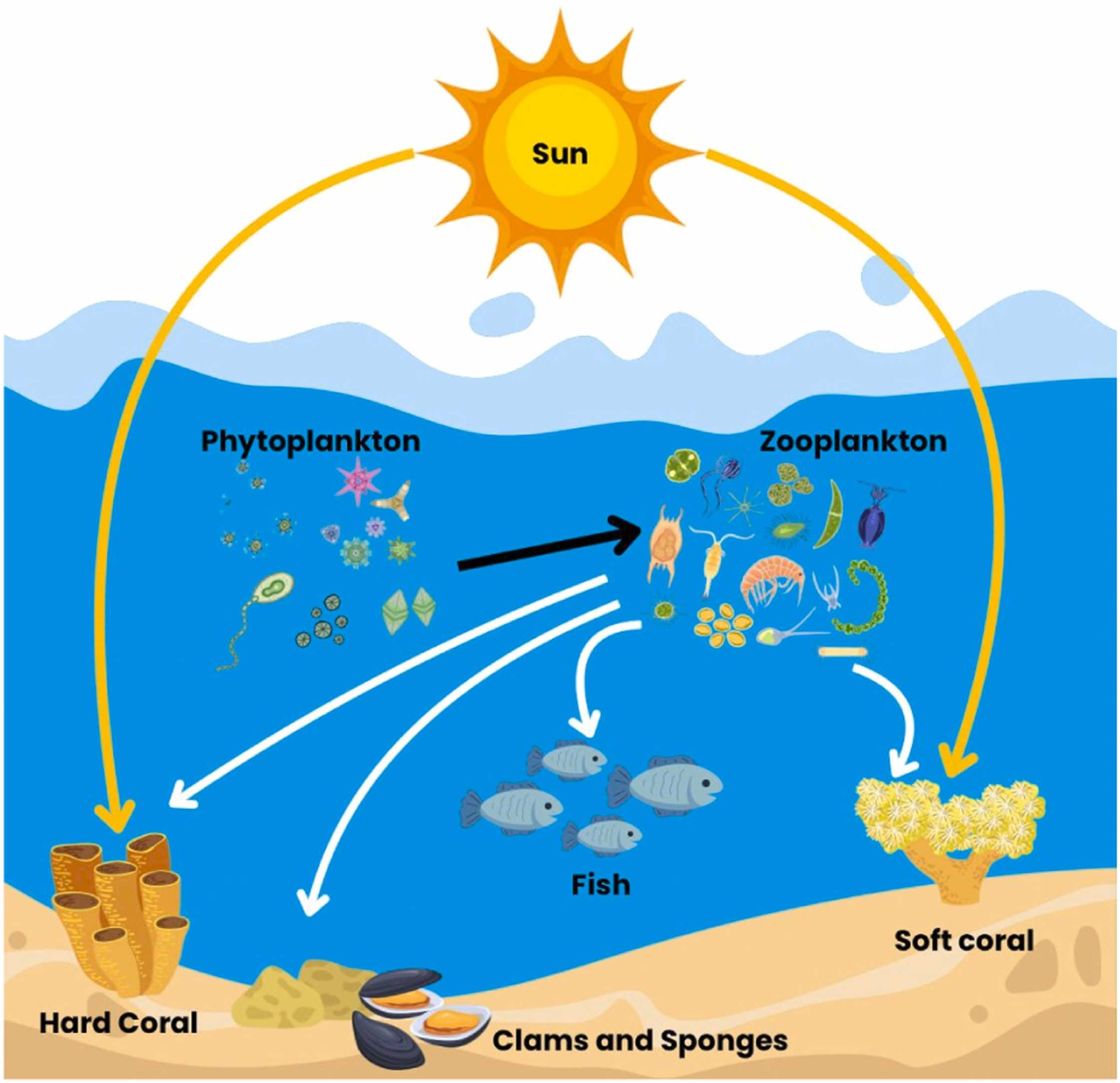 Intelligent Predictive Networks for Nonlinear Oxygen-Phytoplankton-Zooplankton Coupled Marine Ecosystems Under Environmental and Climatic DisruptionsAdil Sultan, Muhammad Junaid Ali Asif Raja, Chuan-Yu Chang, Chi-Min Shu, Muhammad Shoaib, Adiqa Kausar Kiani, and Muhammad Asif Zahoor RajaProcess Safety and Environmental Protection, 2025
In the presented study, a novel application is portrayed for machine predictive intelligent computing via developing autoregressive exogenous (ARX) networks optimized with Levenberg-Marquardt (ARX-LM) to solve nonlinear oxygen phytoplankton-zooplankton (NOPPZP) system in the framework of three compartments based differential equations reflecting state transition of oxygen concentration, phytoplankton and zooplankton density in marine environment. The synthetic datasets for ARX-LM scheme are generated through Adams numerical procedure for NOPPZP model by varying rate of oxygen production, growth rate of maximum phytoplankton per capita, maximum feeding efficiency, phytoplankton natural mortality rates, maximum per capita rate for the zooplankton respiration with fixed values of maximum per capita rate of phytoplankton respiration, natural death rates of the zooplankton half-saturation prey density and constants. The designed ARX-LM computing paradigm is operated on generated data partitioned arbitrarily into training and testing samples by converging iteratively mean square error (MSE) based fitness metric. The exhaustive analyses of the ARX-LM are conducted along with the comparative study from the standard numerical outcomes of NOPPZP by means of MSE learning plots, scrutiny on absolute error, regression, and error-histograms to substantiate the worth of the methodology for sundry scenarios.
@article{sultan2025oxygen, title = {Intelligent Predictive Networks for Nonlinear Oxygen-Phytoplankton-Zooplankton Coupled Marine Ecosystems Under Environmental and Climatic Disruptions}, keywords = {ecological}, author = {Sultan, Adil and Raja, Muhammad Junaid Ali Asif and Chang, Chuan-Yu and Shu, Chi-Min and Shoaib, Muhammad and Kiani, Adiqa Kausar and Raja, Muhammad Asif Zahoor}, journal = {Process Safety and Environmental Protection}, year = {2025}, doi = {10.1016/j.psep.2024.11.092}, } - Comput. Biol. Med.
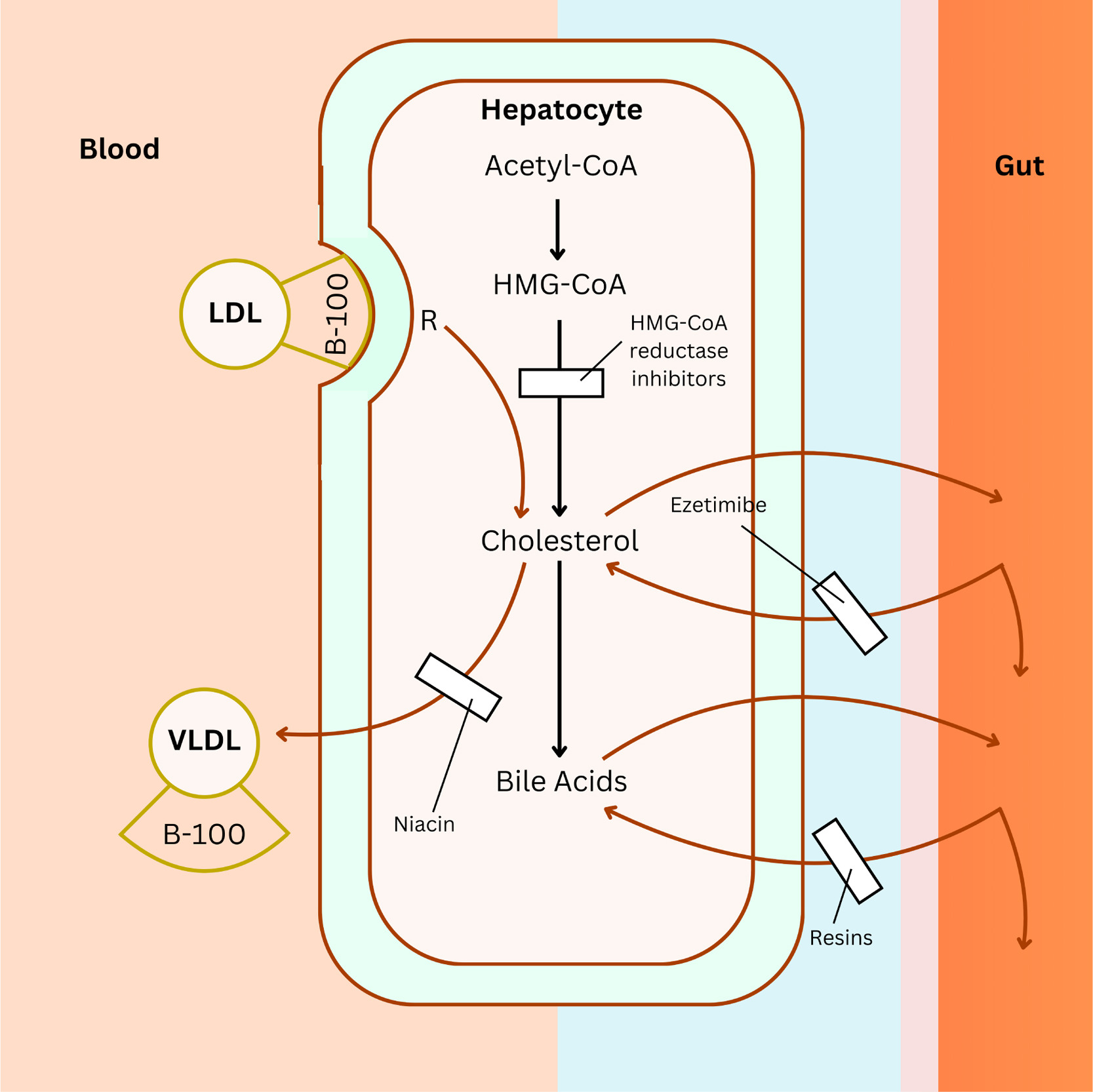 Novel Design of Fractional Cholesterol Dynamics and Drug Concentrations Model with Analysis on Machine Predictive Networks leadMuhammad Junaid Ali Asif Raja, Shahzaib Ahmed Hassan, Chuan-Yu Chang, Hassan Raza, Rikza Mubeen, Zaheer Masood, and Muhammad Asif Zahoor RajaComputers in Biology and Medicine, 2025
Within the intricate fabric of human physiology, cholesterol, a lipid present in cell membranes exerts a discernible effect on the concentration of the drug in human body that influence the aspects of drug pharmacokinetics. The objective of this work is to design a case study based fractional order cholesterol drug interaction model that encapsulates the nuanced dynamics inherent in the multifaceted human physiology with identification of essential variables including drug concentration Ksb and cholesterol level γ. The strength of nonlinear autoregressive with exogenous inputs (NARX) neural networks are exploited to predict the temporal dynamics that reveal the hidden intricacies and subtle patterns within the fractional model. Grunwald-Letnikov (GL) based fractional solver is used to generate the synthetic data, serving as a robust foundation for training, testing and validation of the NARX neural networks for different use cases of cholesterol drug interaction control strategies. A thorough comparative analysis based on exhaustive simulation unveiled a marginal distinction between the results obtained from NARX and the outcomes of fractal technique showing remarkably low MSE in the range of 10-12. The strength of the designed methodology is further verified by using other performance metrics such as MSE, regression index, autocorrelation and cross correlation. The integration of genetic and genomic information tailor the model to address the unique characteristics of individual patient facilitating advancement in precision medicines.
@article{raja2025cholesterol,
  title = {Novel Design of Fractional Cholesterol Dynamics and Drug Concentrations Model with Analysis on Machine Predictive Networks},
  keywords = {biomedical},
  author = {Raja, Muhammad Junaid Ali Asif and Hassan, Shahzaib Ahmed and Chang, Chuan-Yu and Raza, Hassan and Mubeen, Rikza and Masood, Zaheer and Raja, Muhammad Asif Zahoor},
  journal = {Computers in Biology and Medicine},
  year = {2025},
  doi = {10.1016/j.compbiomed.2024.109423},
}
2024
- Chaos Solit.
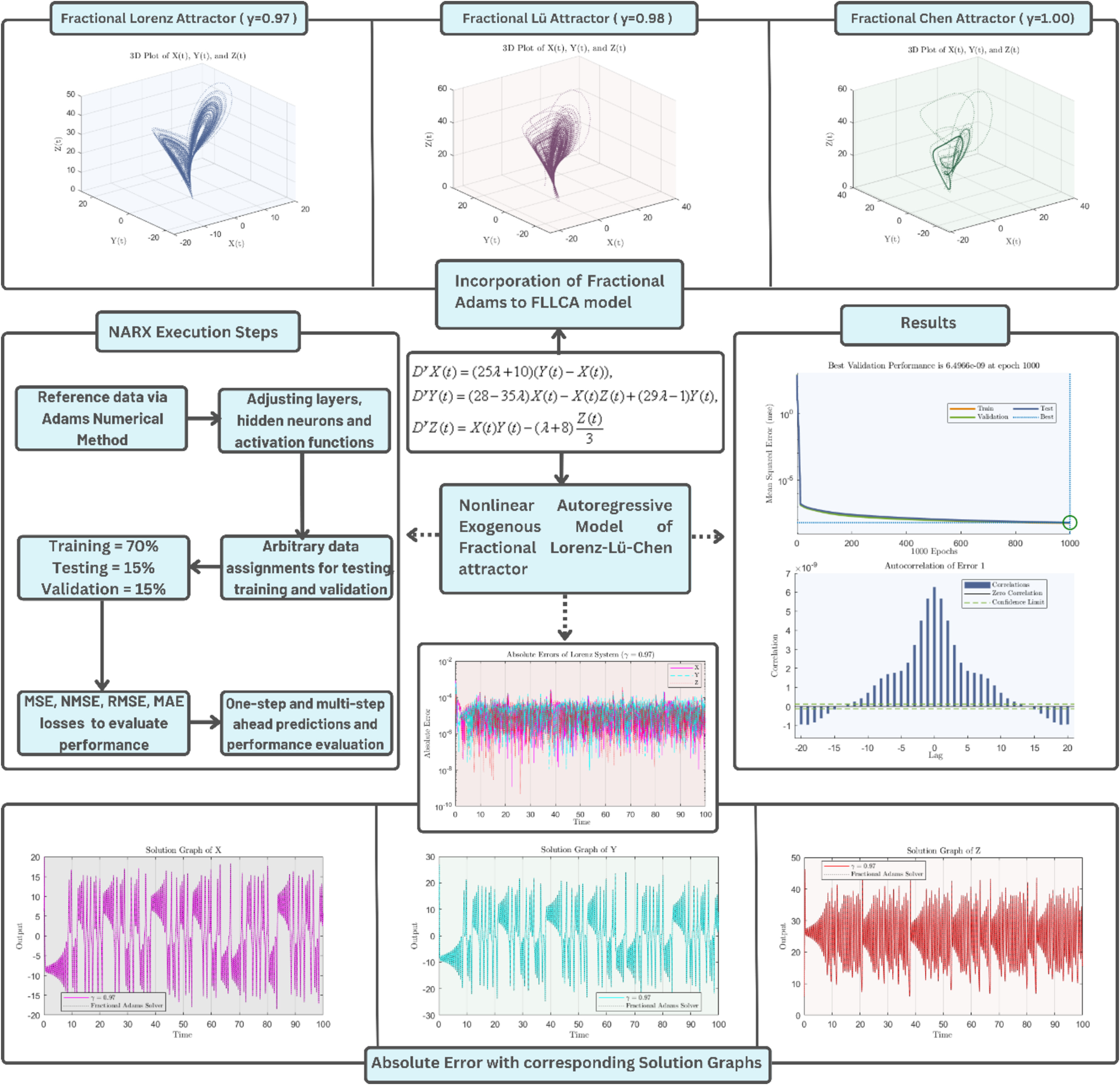 Nonlinear Chaotic Lorenz-Lü-Chen Fractional-Order Dynamics: A Novel Machine Learning Expedition with Deep Autoregressive Exogenous Neural NetworksShahzaib Ahmed Hassan, Muhammad Junaid Ali Asif Raja, Chuan-Yu Chang, Chi-Min Shu, Muhammad Shoaib, Adiqa Kausar Kiani, and Muhammad Asif Zahoor RajaChaos, Solitons & Fractals, 2024
This exhaustive study entails fractional processing of the unified chaotic Lorenz-Lu-Chen attractors using machine learning expedition with Levenberg-Marquardt optimized deep nonlinear autoregressive exogenous neural networks (NARX-NNs-LM). The fractional Lorenz-Lu-Chen attractors (FLLCA) system is unified by three Caputo-based fractional differential equations reflecting Lorenz, Lu, Chen attractors exacted by the single control parameter. The Fractional Adams-Bashforth-Moulton predictor-corrector method is efficaciously employed for the FLLCA models for different variation of fractional orders to generate synthetic datasets for temporal anticipation and processing. Acquired datasets of FLLCA systems were arbitrarily split into a training, validation and test sets for the execution of nonlinear autoregressive exogenous neural networks optimized sequentially using the Levenberg-Marquardt algorithm. This refined NARX-NNs-LM strategy is validated across the reference numerical solutions via scrutiny on mean square error (MSE) convergence graphs, error histograms, regression indices, error autocorrelations, error input autocorrelations and time series response on exhaustive experimentation study on FLLCA systems. The predictive strength of the NARX-NNs-LM strategy is analyzed by means of step-ahead and multistep ahead predictors. Diminutive error metrics on sundry FLLCA scenarios reflect the expert utilization of NARX-NNs-LM for the precise examination, anticipation and forecasting of nonlinear chaotic fractional attractors.
@article{hassan2024lorenz, title = {Nonlinear Chaotic Lorenz-L{\"u}-Chen Fractional-Order Dynamics: A Novel Machine Learning Expedition with Deep Autoregressive Exogenous Neural Networks}, keywords = {chaotic}, author = {Hassan, Shahzaib Ahmed and Raja, Muhammad Junaid Ali Asif and Chang, Chuan-Yu and Shu, Chi-Min and Shoaib, Muhammad and Kiani, Adiqa Kausar and Raja, Muhammad Asif Zahoor}, journal = {Chaos, Solitons \& Fractals}, year = {2024}, doi = {10.1016/j.chaos.2024.115620}, } - Heliyon
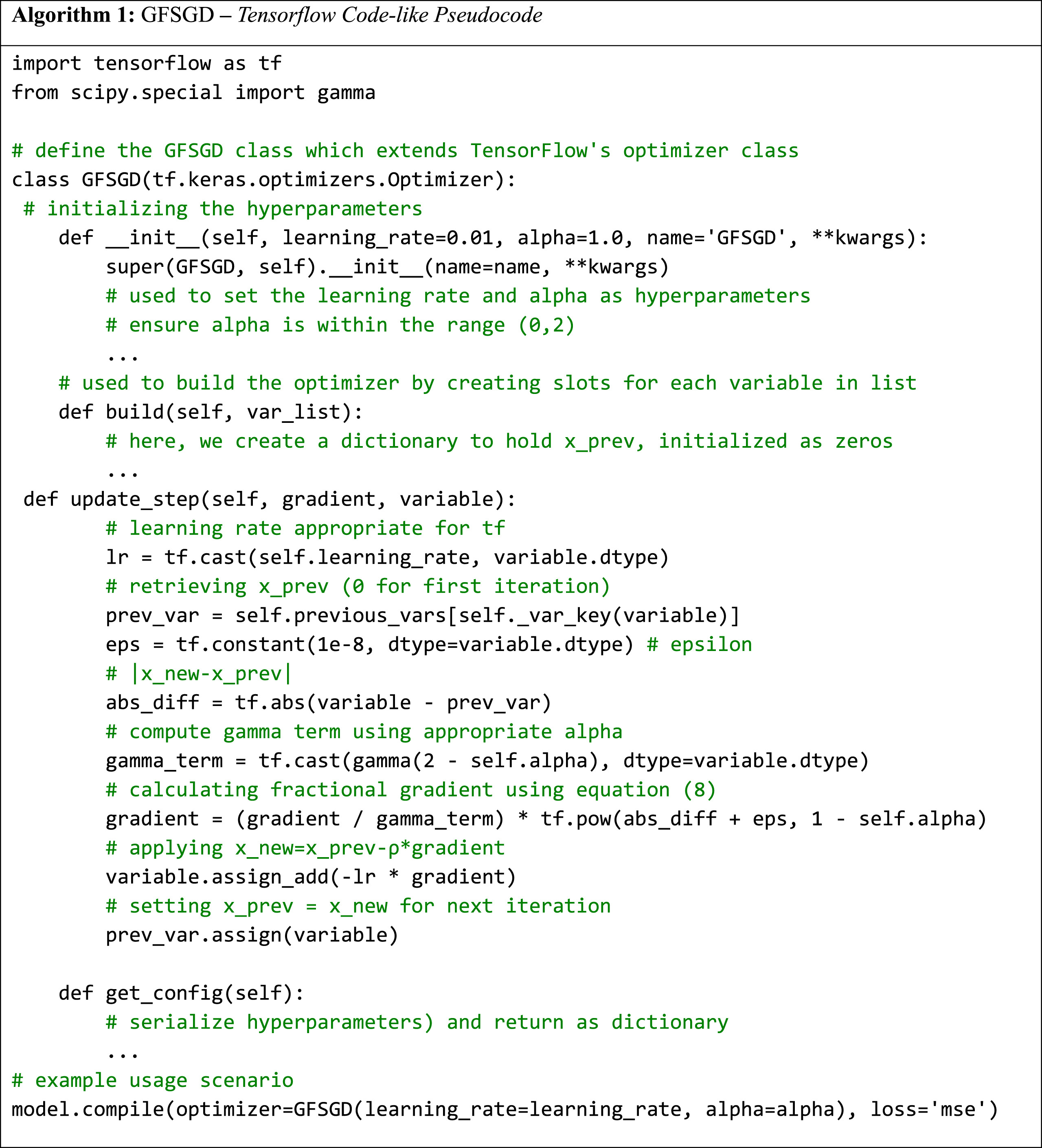 Fractional Gradient-Optimized Explainable Convolutional Neural Network for Alzheimer’s Disease DiagnosisZeshan Aslam Khan, Muhammad Waqar, Naveed Ishtiaq Chaudhary, Muhammad Junaid Ali Asif Raja, Saadia Khan, Farrukh Aslam Khan, Iqra Ishtiaq Chaudhary, and Muhammad Asif Zahoor RajaHeliyon, 2024
Alzheimer’s is one of the brain syndromes that steadily affects the brain memory. The early stage of Alzheimer’s disease (AD) is referred to as mild cognitive impairment (MCI), and the growth of Alzheimer’s is not certain in patients with MCI. The premature detection of Alzheimer’s is crucial for maintaining healthy brain function and avoiding memory loss. Different multi-neural network architectures have been proposed by researchers for efficient and accurate AD detection. The absence of improved feature extraction mechanisms and unexplored efficient optimizers in complex benchmark architectures lead to an inefficient and inaccurate AD classification. Moreover, the standard convolutional neural network (CNN)-based architectures for Alzheimer’s diagnosis lack interpretability in their predictions. An interpretable, simplified, yet effective deep learning model is required for the accurate classification of AD. In this study, a generalized fractional order-based CNN classifier with explainable artificial intelligence (XAI) capabilities is proposed for accurate, efficient, and interpretable classification of AD diagnosis. The proposed study (a) classifies AD accurately by incorporating unexplored pooling technique with enhanced feature extraction mechanism, (b) provides fractional order-based optimization approach for adaptive learning and fast convergence speed, and (c) suggests an interpretable method for proving the transparency of the model. The proposed model outperforms complex benchmark architectures with regard to accuracy using standard ADNI dataset. The proposed fractional order-based CNN classifier achieves an improved accuracy of 99 % as compared to the state-of-the-art models.
@article{khan2024alzheimer, title = {Fractional Gradient-Optimized Explainable Convolutional Neural Network for Alzheimer's Disease Diagnosis}, keywords = {optimization;biomedical}, author = {Khan, Zeshan Aslam and Waqar, Muhammad and Chaudhary, Naveed Ishtiaq and Raja, Muhammad Junaid Ali Asif and Khan, Saadia and Khan, Farrukh Aslam and Chaudhary, Iqra Ishtiaq and Raja, Muhammad Asif Zahoor}, journal = {Heliyon}, year = {2024}, doi = {10.1016/j.heliyon.2024.e39037}, } - Nano
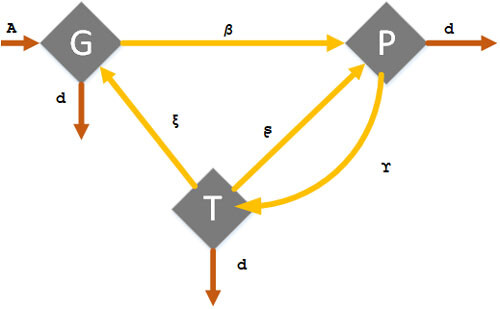 Design of Nonlinear Delay Differential System for Analyzing Vulnerabilities in Nanoscale Hardware Implants: A Deep Dive into Intelligent Computing Networks leadMuhammad Junaid Ali Asif Raja, Zaheer Masood, Ijaz Hussain, Aneela Zameer, Ammara Mehmood, and Muhammad Asif Zahoor RajaNano, 2024
In the annals of contemporary innovation, the study of miniature marvels nanoscale hardware implants emerged as a pivotal instrument, scarcely perceptible to the naked eye, embodies a prowess of cutting-edge technologies and clandestine intrigue. The objective of this research is to introduce a time delay nonlinear system for nanoscale hardware implants vulnerabilities that portray the exploitation of a system by utilizing the stupendous knacks of advanced deep bidirectional long short-term memory (LSTM) networks for time series predictions. Firmware-level bugs present the potential for escalating privileges and executing of code remotely beneath the operating system, allowing for infiltration or complete intervention within a computer system. The designed deep bidirectional LSTM is configured to precisely predict and forecast the dynamic states of time delay differential system, offering a robust framework for mimicking delays that commonly manifest in the real cyber-physical systems. To orchestrate the system compromises in real scenarios through the activation of bugged hardware, time delay factors \tau_1 and \tau_2 are introduced to account the time delays necessary for exploiting the bugged and patched nodes, respectively. Synthetic data is generated to train the LSTM network for all scenarios of the model for the dynamics of bugged, compromised, patched nodes and these acquired information is used for training, testing and validation purposes regarding exploitation of the bugged hardware. Comparative analysis on exhaustive simulations revealed a minimal difference between the LSTM’s predictions and those from the numerical outcomes with MSE in the range of 10-7, underscoring the network’s effectiveness, robustness and stability in modeling complex system dynamics of hardware vulnerabilities.
@article{raja2024nano,
  title = {Design of Nonlinear Delay Differential System for Analyzing Vulnerabilities in Nanoscale Hardware Implants: A Deep Dive into Intelligent Computing Networks},
  keywords = {security},
  author = {Raja, Muhammad Junaid Ali Asif and Masood, Zaheer and Hussain, Ijaz and Zameer, Aneela and Mehmood, Ammara and Raja, Muhammad Asif Zahoor},
  journal = {Nano},
  year = {2024},
  doi = {10.1142/S1793292024501303},
}